
How to Treat Adult Acne: A 2026 Step-by-Step Guide
Table of Contents
- Understanding Adult Acne: Why It's Different in 2026
- Step 1: Assess Your Acne Type and Root Causes
- Step 2: Start With Topical Prescription Medications and Retinoids
- Step 3: Hormonal Acne Treatment for Women
- Step 4: How to Repair Skin Barrier After Acne
- Step 5: Build Your Best Medical-Grade Skincare for Acne Routine
- Common Mistakes to Avoid When Treating Adult Acne
- Conclusion
- Frequently Asked Questions
Last Updated: September 30, 2026
Understanding Adult Acne: Why It's Different in 2026
Adult acne differs from teenage acne in triggers, presentation, and treatment approach. If you're struggling with breakouts in your 30s, 40s, or 50s, modern treatments work better than ever.
Adult breakouts often stem from hormonal shifts, stress, or environmental factors. The skin barrier thins with age, oil production patterns shift, and inflammation responds differently to treatment.
This guide covers assessment, prescription options, hormonal solutions, and the skincare routine needed to treat adult acne effectively.
Step 1: Assess Your Acne Type and Root Causes
Before you treat adult acne, you need to know what you're treating. Not all breakouts are the same.
Start by answering these questions:
- When do breakouts appear? Right before your period, or random throughout the month?
- Where do they cluster? Jawline and chin (hormonal), forehead and nose (oil-related), or scattered everywhere?
- What triggers them? New products, stress, certain foods, or nothing you can identify?
- How inflamed are they? Deep cystic bumps, surface whiteheads, or a mix?
Hormonal acne typically appears along the lower face, jawline, chin, neck. It's often deeper, more painful, and harder to treat with topical products alone. Non-hormonal acne can appear anywhere and often responds well to targeted skincare.
Environmental factors affect adult skin more than younger skin. Your thinner, more reactive barrier means what worked last year might irritate you now.
Step 2: Start With Topical Prescription Medications and Retinoids
Topical treatments work on the surface and pore lining where adult breakouts start. Correct application, layering, timing, and sequencing, determines results versus irritation.
Benzoyl peroxide kills acne bacteria and reduces inflammation. Start low (2.5%) if your skin is sensitive or dry. The American Academy of Dermatology recommends benzoyl peroxide as a first-line treatment for mild to moderate acne. It works fast; many people see improvement within one week.
The Face Reality 2.5% Advanced Acne Med ($29) is formulated with micronized benzoyl peroxide, which penetrates pores without excessive dryness. If you've used benzoyl peroxide before and tolerated it well, the stronger Face Reality 5% Advanced Acne Med ($30) delivers more aggressive bacteria-fighting power while including hydrating sodium hyaluronate to protect your barrier.

Retinoids are the gold standard for texture, discoloration, and prevention. Start at 0.25-0.5% and use 2-3 times weekly, increasing frequency over 4-6 weeks as skin adapts.
The PCA SKIN Intensive Clarity Treatment ($120) combines 0.5% pure retinol with 2% salicylic acid. Salicylic acid exfoliates pores while retinol promotes healing and prevents future breakouts.
Expect temporary dryness, flaking, and mild irritation for 2-3 weeks as your skin adjusts.
How to Layer Actives Without Causing Irritation: The Sandwich Method
The biggest mistake people make is applying multiple actives in sequence and expecting their skin to tolerate it.
Evening application sequence (for retinol + benzoyl peroxide rotation):
- Cleanse with your gentle cleanser. Pat skin dry completely, actives work best on dry skin, but you'll add hydration next.
- Apply hydrating toner or essence (with glycerin or hyaluronic acid) to damp skin. This is your first "sandwich layer." Wait 1-2 minutes for it to absorb.
- Apply your active (retinol on retinol nights, benzoyl peroxide on BP nights). Use a pea-sized amount. Gently press into skin rather than rubbing.
- Wait 15-20 minutes. This allows the active to penetrate and dry down completely.
- Apply lightweight hydrating moisturizer (your second "sandwich layer"). This seals in the active and buffers any remaining irritation. Look for ceramides, niacinamide, or hyaluronic acid.
- Optional: Add an occlusive. If your skin is very dry or irritated, apply a thin layer of richer cream or facial oil over the moisturizer to lock everything in.
Step 3: Hormonal Acne Treatment for Women
If breakouts cluster on your lower face and worsen around your cycle, hormonal acne is likely. Topical treatments alone often fail because the problem originates internally.
Step 4: How to Repair Skin Barrier After Acne
Acne treatments disrupt the environment where acne thrives, but also damage your barrier. Understanding repair and knowing when professional treatment is worth the investment determines whether you achieve clear skin or cycle through irritation.
FACE REALITY - 2.5% Advanced Acne Med →
Cost-Benefit Analysis: Professional vs. OTC Acne Treatment
OTC Route (Budget: $100-$300 for 3 months)
- Upfront cost: ~$60-$155 for starter kit (benzoyl peroxide, retinol, moisturizer, SPF).
- Timeline to results: 6-12 weeks. Lower concentration actives work slower with less irritation risk.
- Success rate: 40-50% of people with mild acne see improvement. Hormonal acne rarely responds to OTC topicals alone.
- Hidden cost: Many spend $200-$400 testing products before finding what works.
Professional Dermatology Route (Budget: $200-$500+ for 3 months)
- Upfront cost: ~$315-$700 (dermatology visit, prescriptions, professional products). Insurance often covers visits and medications, reducing out-of-pocket to $50-$150.
- Timeline to results: 4-8 weeks. Prescription actives work faster than OTC.
- Success rate: 70-85% see significant improvement within 8-12 weeks.
Medical-Grade Skincare Route (Budget: $200-$400 for 3 months)
- Upfront cost: ~$165-$300 for 3 months.
- Timeline to results: 6-10 weeks. Higher concentrations and better delivery than OTC, lower than prescription.
- Success rate: 50-70% with mild to moderate acne. Works best combined with lifestyle changes or as a bridge to dermatology.
ROI Comparison: Which Path Saves Money Long-Term?
| Treatment Path | 3-Month Cost | Success Rate | Cost Per Clear Month | Best For |
|---|---|---|---|---|
| OTC only | $100-$300 | 40-50% | $200-$750 (if successful) | Mild acne, budget-conscious |
| Medical-grade skincare | $200-$400 | 50-70% | $286-$800 | Mild-moderate acne, barrier sensitivity |
| Professional dermatology | $300-$700 | 70-85% | $353-$1,000 (often covered by insurance) | Moderate-severe, hormonal, cystic acne |
When to upgrade from OTC to professional:
- Your acne hasn't improved after 8-10 weeks of consistent OTC treatment
- Breakouts are cystic, painful, or leaving scars
- Acne is clearly hormonal (jawline, chin, worsens with cycle)
- You're over 35 and acne is new or worsening
- OTC treatments cause persistent irritation or barrier damage
Step 5: Build Your Best Medical-Grade Skincare for Acne Routine
A solid routine holds everything together. It's not complicated, but it must be consistent.

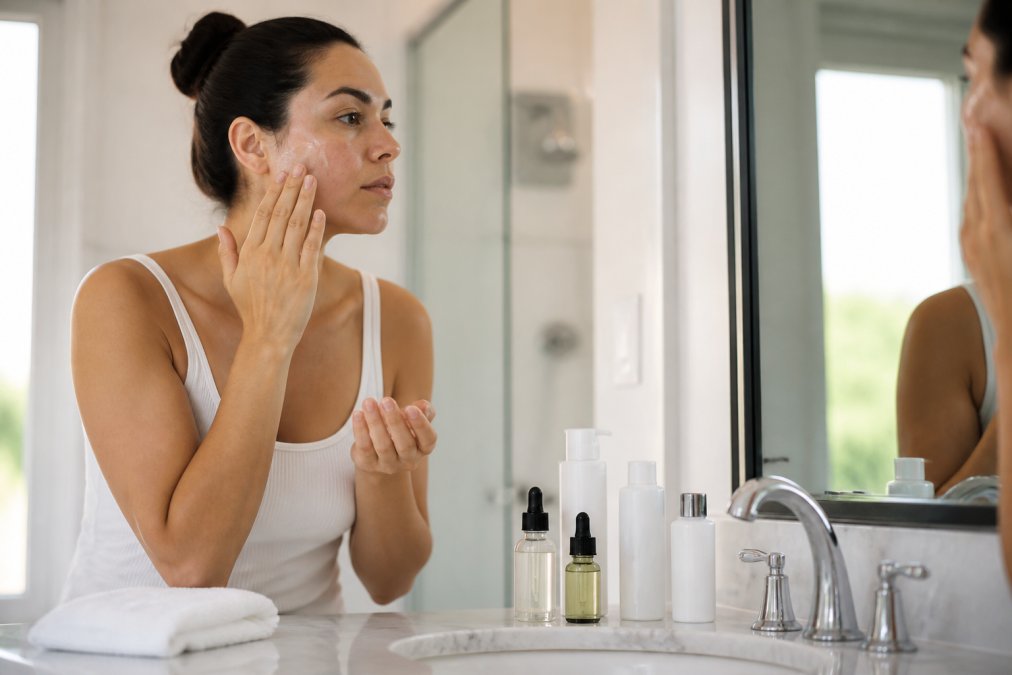
Morning routine (3 steps):
- Cleanse gently. Use a pH-balanced cleanser that doesn't strip. Acne-prone skin needs hydration, not harshness.
- Apply benzoyl peroxide. Thin layer to acne-prone areas. Wait 5 minutes for it to dry.
- Moisturize and protect. Lightweight hydrator + broad-spectrum SPF 30+. Non-negotiable. Acne treatments make skin photosensitive.
Evening routine (4 steps):
- Cleanse. Same gentle cleanser.
- Apply retinoid. Start 2-3 times per week. Increase to nightly over 6-8 weeks.
- Wait 20 minutes. Retinol works best on completely dry skin.
- Moisturize. Richer than morning. Your skin repairs at night.
Common Mistakes to Avoid When Treating Adult Acne
Mistake 1: Changing products too fast. Most treatments need 6-8 weeks to show results. Commit to a routine for at least six weeks before switching.
Conclusion
Treating adult acne requires identifying your trigger, using evidence-based treatments, and protecting your barrier. Start with dermatological assessment if breakouts are severe or hormonal. Topical benzoyl peroxide and retinoids work for most; hormonal acne needs oral medication. Always use SPF and moisturize.
| Step | Product | Strength | Frequency | When to See Results |
|---|---|---|---|---|
| Cleanse | Gentle cleanser | N/A | 2x daily | Immediate comfort |
| Treat acne | Benzoyl peroxide | 2.5-5% | 1x daily | 1-2 weeks |
| Repair texture | Retinol | 0.25-0.5% | 2-3x weekly | 6-8 weeks |
| Protect barrier | Moisturizer + SPF | N/A | 2x daily | Ongoing |
Frequently Asked Questions
What's the fastest way to treat adult acne?
The fastest results come from combining topical benzoyl peroxide with a retinoid and addressing hormonal factors if present. Benzoyl peroxide kills acne-causing bacteria within days, while retinoids improve cell turnover over 6-8 weeks. For hormonal acne, oral contraceptives or spironolactone work systemically. Most people see meaningful improvement within 4-6 weeks when using evidence-based treatments consistently, though complete clearance typically takes 12-16 weeks.
How does hormonal acne treatment for women differ from other acne types?
Hormonal acne treatment for women targets androgen signals that trigger excess sebum production, typically using oral contraceptives containing norgestimate or drospirenone, or spironolactone (an androgen blocker). These systemic treatments work alongside topical acne medications to address the root hormonal cause. Non-hormonal treatments alone often fail for hormonal acne because they don't address the underlying endocrine trigger, making combined therapy more effective for women experiencing cyclical breakouts.
Can diet and lifestyle changes really clear adult acne?
Diet and lifestyle modifications support acne treatment but rarely clear it alone. High-glycemic foods and dairy may worsen inflammation in acne-prone skin, while adequate sleep and stress management reduce stress-induced breakouts. However, these changes work best as part of a complete regimen including topical retinoids, benzoyl peroxide, and professional-grade skincare. Think of lifestyle changes as foundational support that enhances medical treatment, not a replacement for it.
When should I see a dermatologist for adult acne?
See a dermatologist if over-the-counter treatments haven't improved your acne after 8-12 weeks, if you have severe inflammatory acne, suspect hormonal causes, experience acne scarring, or if breakouts significantly affect your mental health. A dermatologist can prescribe oral antibiotics, isotretinoin (for severe cases), or hormonal therapies that require medical oversight. Early professional intervention prevents permanent scarring and ensures you're using evidence-based treatments tailored to your specific acne subtype.
Additional Resources:
For clinical guidance on acne treatment protocols, the American Academy of Dermatology clinical guidelines provides evidence-based recommendations for both topical and systemic treatments.
For hormonal acne specifically, the American College of Obstetricians and Gynecologists on hormonal contraceptives outlines which oral contraceptives are approved for acne treatment and expected timelines for improvement.