
Hormonal vs Cystic Acne: Treatment Differences
Table of Contents
- Hormonal Acne vs Cystic Acne: Key Differences
- Symptoms and Visual Identification
- Biological Causes and Triggers
- How to Treat Deep Cystic Acne: Professional Approaches
- Best Medical-Grade Skincare for Acne
- Hormonal Acne Treatment Timeline: What to Expect
- When to See a Dermatologist
- Prevention and Long-Term Management
- Frequently Asked Questions
Last Updated: September 26, 2026
Hormonal Acne vs Cystic Acne: Key Differences
Hormonal acne vs cystic acne are distinct conditions requiring different treatment approaches. Both produce inflamed, painful lesions that can scar, but their underlying biology, triggers, and treatment pathways differ fundamentally.
What Defines Hormonal Acne
Hormonal acne stems from androgen fluctuations that increase sebaceous gland activity and bacterial growth. It typically appears on the lower face, jawline, chin, and neck in a cyclical pattern tied to the menstrual cycle, stress, or perimenopause.
Lesions are typically inflammatory papules and pustules that cluster in the same areas repeatedly. Hormonal acne often clears with consistent skincare and hormonal management, then returns when triggers reappear, because it's driven by endocrine system activity rather than pore blockage alone.
Understanding Cystic Acne
Cystic acne consists of deep-seated lesions below the skin's surface that appear as large, painful bumps without whiteheads. They develop from pore blockage combined with intense inflammation and bacterial colonization in the follicle and dermis.
Cystic acne appears on the face, chest, shoulders, and back in scattered or concentrated patterns. These lesions resolve slowly and carry high scarring and hyperpigmentation risk due to deep inflammation.
Symptoms and Visual Identification
Hormonal acne appears as smaller red inflammatory bumps along the jawline, chin, and lower cheeks, often with whiteheads. They're tender but not deeply painful and appear in waves tied to your cycle or stress.
Cystic acne appears as larger, deeper, painful bumps without whiteheads that feel like hard knots beneath the surface. They persist for weeks and often leave indentation scars.
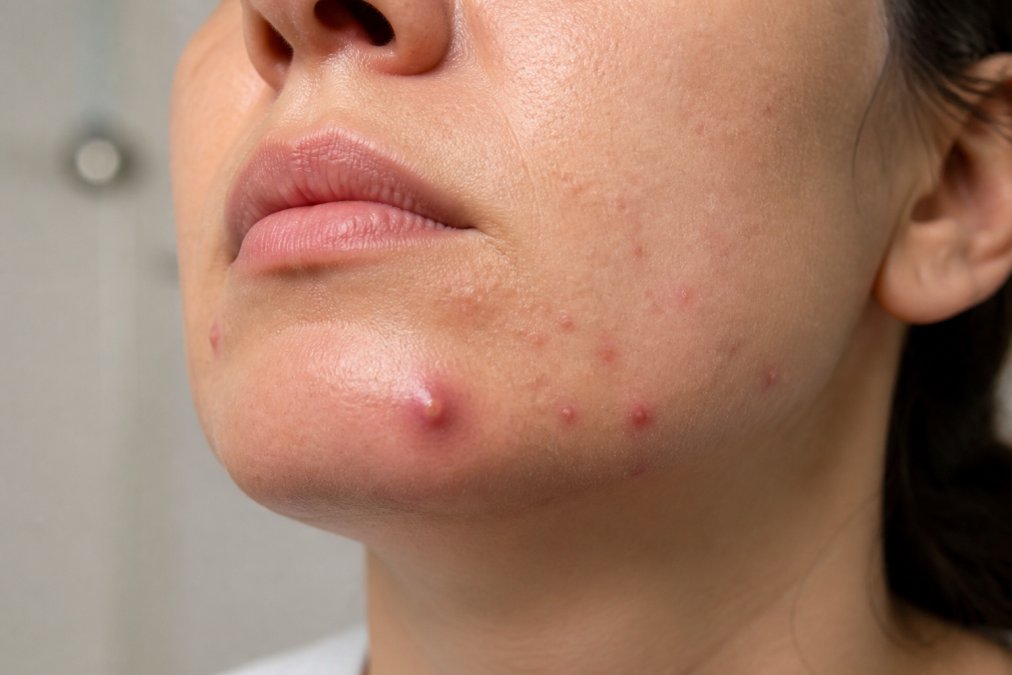
Pressing gently on the lesion reveals the difference: hormonal acne is tender but superficial, while cystic acne causes sharp pain and feels like a solid mass. Hormonal acne responds to topical treatment in 1-2 weeks; cystic acne requires weeks of treatment and often needs professional intervention like corticosteroid injections.
Biological Causes and Triggers
Hormonal Fluctuations and Sebaceous Gland Activity
Hormonal acne stems from androgens' effect on sebaceous glands. When androgen levels rise from menstrual cycle shifts, stress, or hormonal imbalance, glands enlarge and produce excess oil, creating an environment where acne bacteria thrive.
The menstrual cycle is the most common trigger: progesterone rises in the luteal phase, increasing sebum production and causing breakouts 7-10 days before the period. Stress triggers cortisol release, boosting androgen production. Perimenopause and certain medications can also trigger or worsen breakouts.
Inflammation in hormonal acne is moderate and driven by bacterial overgrowth in excess sebum rather than deep-tissue immune response, which is why topical treatments that reduce bacteria and oil work well.
Deep-Seated Inflammation in Cystic Acne
Cystic acne develops from severe pore blockage, intense bacterial colonization, and a strong inflammatory immune response. The congested follicle ruptures beneath the skin surface, triggering aggressive immune response and deep inflammation.
Cystic acne is driven by pore blockage severity and inflammatory intensity, not hormonal fluctuations. Genetic predisposition plays a role, and environmental factors like friction, occlusive products, and certain medications can trigger or worsen it.
Severe inflammation compromises the skin barrier, making it more reactive and slower to heal, which is why barrier-supportive skincare alongside acne treatment benefits people with cystic acne.
How to Treat Deep Cystic Acne: Professional Approaches
Topical vs Oral Medication Approaches
Topical treatments reduce bacteria and promote cell turnover. Benzoyl peroxide (2.5%-10%) is the gold standard for mild to moderate cystic acne. Topical retinoids increase cell turnover and reduce pore blockage. Salicylic acid exfoliates inside pores.
Topical treatments struggle with deep cystic lesions because they can't penetrate far enough into the dermis. For widespread cystic acne, they're usually insufficient alone.
Oral antibiotics reduce bacteria systemically and have anti-inflammatory effects. Spironolactone blocks androgens and reduces sebum production, particularly for hormonal acne. Isotretinoin is reserved for severe, treatment-resistant cystic acne.
Cystic acne responds best to oral medication plus topical treatment for barrier support. Hormonal acne often responds to topical treatments combined with hormonal management.
Dermatological Interventions
When topical and oral treatments aren't enough, dermatologists turn to professional procedures:
Corticosteroid injections deliver anti-inflammatory medication directly into cystic lesions, flattening them within 24-48 hours and significantly reducing scarring risk.
Laser therapy targets inflammation and bacteria with different wavelengths reducing sebaceous gland activity, destroying bacteria, or promoting healing. It's particularly useful for widespread cystic acne or post-acne scarring.
Chemical peels unclog pores and reduce inflammation but work best as part of a comprehensive treatment plan rather than alone for deep cystic acne.
Best Medical-Grade Skincare for Acne
Benzoyl Peroxide and Topical Retinoids
Benzoyl peroxide is the most clinically proven topical acne treatment. For hormonal and mild to moderate inflammatory acne, 2.5%-5% is highly effective; 10% delivers stronger results but increases dryness and irritation.
Acne-Safe Skincare Systems
Supporting acne treatment with proper cleansing, toning, and moisturizing is critical. Many acne products strip the skin barrier, triggering increased oil production and irritation that worsens breakouts.
| Product | Best For | Strength | Price |
|---|---|---|---|
| Face Reality 2.5% Advanced Acne Med | Mild acne, sensitive skin, first-time users | Gentle | $29.00 |
| Face Reality 5% Advanced Acne Med | Moderate acne, acclimated users | Moderate | $30.00 |
| PCA SKIN Acne Control Set | Comprehensive acne management | Strong | $255.00 |
| Face Reality Acne-Safe Kit for Oily Skin | Oily, acne-prone skin support | Foundational | $132.00 |
| Face Reality Acne-Safe Kit for Dry or Sensitive Skin | Barrier support during treatment | Foundational | $138.00 |
Hormonal Acne Treatment Timeline: What to Expect
Hormonal acne responds faster than cystic acne because lesions are shallower and inflammation is moderate. With consistent topical treatment, many see improvement within 2-4 weeks.
When to See a Dermatologist
See a dermatologist immediately if you have:
- Widespread cystic acne (more than a few lesions)
- Acne that hasn't improved after 8-12 weeks of consistent topical treatment
- Acne accompanied by other hormonal symptoms (irregular periods, excess hair growth, hair loss)
- Post-acne scarring or hyperpigmentation you want to address
- Acne severe enough to affect your quality of life or mental health
See a dermatologist within a few weeks if you have:
- Moderate inflammatory acne that's spreading
- Acne resistant to over-the-counter treatments
- Uncertainty about whether your acne is hormonal or cystic
- Sensitivity or irritation from acne treatments
You can manage with professional-grade skincare if you have:
- Mild hormonal acne in predictable locations
- Occasional inflammatory breakouts
- Clear skin goals within 3 months
A dermatologist can prescribe oral medications (antibiotics, spironolactone, isotretinoin), perform professional procedures (corticosteroid injections, laser therapy), and identify underlying hormonal issues driving acne. They can also rule out other conditions mimicking acne.
Prevention and Long-Term Management
For hormonal acne: Track breakout patterns relative to your cycle or stress. Manage hormonal triggers by adjusting birth control, reducing stress, or consulting an endocrinologist. Use consistent topical treatment year-round for maintenance. Support barrier health with acne-safe moisturizers.
Frequently Asked Questions
How can you tell the difference between hormonal acne and cystic acne?
Hormonal acne typically appears as smaller, inflammatory bumps clustered along the jawline, chin, and lower face, often triggered by hormonal fluctuations during the menstrual cycle. Cystic acne presents as large, deep, painful nodules beneath the skin's surface that don't come to a head. Cystic lesions are firm, inflamed, and can persist for weeks. While hormonal acne responds well to topical treatments with benzoyl peroxide and retinoids, cystic acne often requires systemic treatment or professional dermatological intervention due to the deep-seated inflammation.
What is the hormonal acne treatment timeline?
Hormonal acne treatment typically shows initial results within 4-6 weeks of consistent use with topical retinoids and benzoyl peroxide, though full improvement may take 8-12 weeks. Oral hormonal therapies like spironolactone can take 2-3 months to demonstrate noticeable effects as the endocrine system adjusts. The PCA SKIN Acne Control Set is designed to show visible improvement in as little as one week for active breakouts, but long-term management requires sustained use. Results vary based on acne severity, skin sensitivity, and individual hormonal patterns.
How do you treat deep cystic acne?
Deep cystic acne requires professional medical intervention because lesions extend below the skin's surface where topical products cannot penetrate effectively. Dermatologists typically prescribe isotretinoin (Accutane) for severe cases, or oral antibiotics combined with topical retinoids for moderate cystic acne. Corticosteroid injections directly into lesions provide rapid inflammation reduction. Supporting treatment with professional-grade skincare like the Face Reality Acne-Safe Kits helps maintain skin barrier health and prevents secondary breakouts. A dermatological assessment is essential to determine the most appropriate systemic treatment approach.
Can over-the-counter products treat cystic acne?
Over-the-counter products alone typically cannot resolve cystic acne because the inflammation occurs deep within the skin where topical ingredients cannot reach. While medical-grade benzoyl peroxide and retinoids in products like the PCA SKIN Acne Control Set can help manage mild inflammatory acne and prevent future breakouts, true cystic acne requires prescription-strength treatments or professional procedures. However, professional-grade skincare systems are essential for supporting barrier health and preventing secondary acne while undergoing dermatological treatment.