
Safe Skincare for Highly Sensitive Skin: A 2026 Guide
Table of Contents
- Understanding Sensitive Skin Triggers and Barriers
- How to Fix Damaged Skin Barrier Safely
- Ingredients to Avoid for Sensitive Skin
- Essential Ingredients That Calm and Protect
- Patch Testing Skincare Products: Step-by-Step
- Daily Skincare Routine for Highly Sensitive Skin
- Managing Sensitivity in Different Climates and Seasons
- Conclusion
- Frequently Asked Questions
Last Updated: September 3, 2026
Understanding Sensitive Skin Triggers and Barriers
Your skin's barrier is its first line of defense. When compromised, everything irritates it. Sensitive skin develops when the outermost layer, the stratum corneum, loses its ability to retain moisture and block irritants through harsh cleansing, over-exfoliation, environmental stress, or genetics. Once weakened, your skin becomes reactive to ingredients it previously tolerated, fragrance, sulfates, alcohol, and even some "gentle" actives trigger inflammation and redness.
The skin barrier consists of lipids, ceramides, cholesterol, and fatty acids arranged in a brick-and-mortar structure. When this lipid layer depletes, transepidermal water loss increases and your skin dries out faster. Dehydrated skin is reactive skin. Environmental triggers compound the problem: cold, dry air strips moisture; hot water damages the lipid barrier; pollution introduces free radicals; stress hormones push an already-sensitive complexion over the edge. Understanding these triggers is the first step toward rebuilding what's broken, not just masking symptoms.
How to Fix Damaged Skin Barrier Safely
Repairing a compromised barrier takes time and deliberate approach. You cannot force healing; you can only remove obstacles and provide the right building blocks.
The foundation is a simplified routine: a gentle, non-lathering cleanser, a hydrating toner or essence if needed, a barrier-supporting moisturizer, and broad-spectrum SPF. Strip away everything else, no active ingredients, exfoliation, fragrance, or essential oils. Your goal is stabilization, not improvement.
Hydration comes first, but not all hydration is equal. Your skin needs both humectants, which draw water into the skin, and occlusives, which seal that moisture in. A humectant alone will actually dehydrate you further without an occlusive layer on top. This is where many people fail: they use a hydrating serum and skip the moisturizer, wondering why their skin feels tight.
The role of ceramides and humectants
Ceramides are lipids your skin naturally produces. When your barrier is damaged, ceramide levels drop. Topical ceramides replenish what's missing. Look for ceramide NP, ceramide AP, and ceramide EOP, the most effective forms. They work best combined with cholesterol and fatty acids, which replicate your skin's natural lipid profile.
Hyaluronic acid is the most researched humectant, holding up to 1000 times its weight in water (peer-reviewed research). But it only works if your skin has moisture to draw from. In dry climates or without an occlusive on top, hyaluronic acid can pull moisture from deeper skin layers, making dehydration worse. Always layer an occlusive over hyaluronic acid products.
Glycerin is another powerful humectant, often underrated. It's less trendy than hyaluronic acid but equally effective and more stable across different humidity levels. Many dermatologists prefer it for sensitive skin because it's less likely to cause irritation.
Squalane is an occlusive that mimics your skin's natural oils. It's non-comedogenic, lightweight, and rarely triggers reactions. The ANFISA SKIN ÂN-BALM Radiant Hydra-Balm ($150.00) combines squalane with additional nourishing oils, making it ideal for barrier repair without the heaviness of traditional creams.

Strengthening your skin microbiome
Your skin hosts trillions of microorganisms that maintain pH balance and prevent harmful bacteria from colonizing. When you strip your skin with harsh products or antibacterial ingredients, you damage this ecosystem. A weakened microbiome means less natural protection and more inflammation.
Supporting your microbiome means avoiding antimicrobial cleansers and products with high alcohol concentrations. Choose pH-balanced cleansers, your skin's natural pH is around 4.5 to 5.5, slightly acidic. Alkaline soaps disrupt the microbiome immediately. The FACE REALITY Barrier Balance Creamy Cleanser ($37.00) is formulated to support both the barrier and the microbiome, with a pH that respects your skin's natural acidity.
Prebiotics and postbiotics are emerging ingredients that feed beneficial bacteria and strengthen the microbiome. Prebiotic inulin and postbiotic lysates appear in advanced barrier-repair products, restoring the bacterial balance that makes your skin resilient.
Ingredients to Avoid for Sensitive Skin
Certain ingredients are almost universally problematic for reactive skin. Avoiding them during barrier repair is triage, not forever.
Fragrance is the most common culprit. Even "natural" fragrance from essential oils triggers contact dermatitis in sensitive skin. Avoid anything labeled "fragrance," "parfum," "essential oil blend," or "natural fragrance."
Alcohol denat (SD alcohol) strips oils, disrupts the microbiome, and increases transepidermal water loss. Cetyl alcohol and stearyl alcohol are fatty alcohols that don't irritate, but ethanol and isopropyl alcohol belong nowhere near compromised skin.
Sulfates (sodium lauryl sulfate and sodium laureth sulfate) strip the skin barrier aggressively. Non-lathering cleansers work better because they clean without stripping.
Retinoids, including retinol and prescription retinoids, are powerful but destabilizing during barrier repair. Even "gentle" retinol causes irritation and increased sensitivity. Wait until your barrier is stable before introducing any retinoid.
Exfoliating acids (AHA and BHA) remove the outermost layer of skin, exactly what you don't want when your barrier is already compromised. Save acids for later, when your barrier is strong.
Vitamin C serums, while beneficial long-term, are often unstable and acidic. Defer vitamin C until your barrier recovers.
Niacinamide is usually safe, but concentrations above 4-5% can irritate some reactive skin types. Start low and go slow.
Essential Ingredients That Calm and Protect
Once you understand what to avoid, focus on what actually heals. These ingredients have research backing their role in barrier repair and sensitivity reduction.
Niacinamide strengthens the barrier by increasing ceramide and fatty acid production. It reduces inflammation and redness at 2-4% concentration. Niacinamide also regulates sebum production and supports the microbiome.
Niacinamide and squalane for reactive skin
The combination of niacinamide and squalane is particularly effective for barrier repair. Niacinamide builds the barrier from within by stimulating lipid synthesis. Squalane seals moisture in and prevents water loss. Together, they address both the structural problem (weak lipids) and the functional problem (dehydration).
The PCA SKIN Dual Action Redness Relief ($128.00) combines niacinamide with ceramides and additional protective ingredients, specifically formulated for reactive skin. This product targets redness directly while strengthening the barrier.
Azelaic acid is an underrated ingredient for sensitive skin with rosacea or post-inflammatory hyperpigmentation. It's gentler than other actives, anti-inflammatory, and supports the microbiome. The ANFISA SKIN ÂN-DEW 10% Azelaic Acid + PHA Serum ($196.00) includes azelaic acid with a gentle polyhydroxy acid, suitable for sensitive skin ready for mild exfoliation after barrier repair.

Soothing agents like aloe vera and chamomile
Aloe vera hydrates and reduces inflammation through polysaccharides and flavonoids. Look for aloe high in the ingredient list.
Chamomile extract calms irritation and reduces redness. Unlike fragrant chamomile essential oil, chamomile extract is stable and non-irritating.
Centella asiatica (cica) strengthens the barrier and reduces inflammation while increasing collagen synthesis.
Panthenol (provitamin B5) hydrates and soothes. It's rarely irritating and works synergistically with ceramides.
Hydrocortisone, in prescription or over-the-counter formulations, reduces inflammation quickly. The PCA SKIN CliniCalm™ 1% ($65.00) uses 1% hydrocortisone for temporary relief of itching and redness. Use it for acute flares, not long-term maintenance.
Patch Testing Skincare Products: Step-by-Step
Patch testing prevents reactions before they happen. Choose a small, inconspicuous area like the inner arm or behind the ear. Apply a dime-sized amount of the product to clean skin and leave it for 24 hours without washing or applying other products to that area. If no reaction occurs, apply the product to your face in a small test area for three days before committing to full-face application.
Watch for redness, burning, stinging, itching, or swelling. Some products sting initially but settle, this is normal. True irritation worsens or persists.
Introduce one new product at a time, waiting a full week between introductions. If a reaction occurs, you know exactly which product caused it. Keep a simple log: product name, date introduced, any reactions, and how your skin looks after one week. Over time, you'll see patterns in which ingredients and product types work for you.
Daily Skincare Routine for Highly Sensitive Skin
A successful routine for sensitive skin is minimal, consistent, and focused on barrier support. Complexity is the enemy.
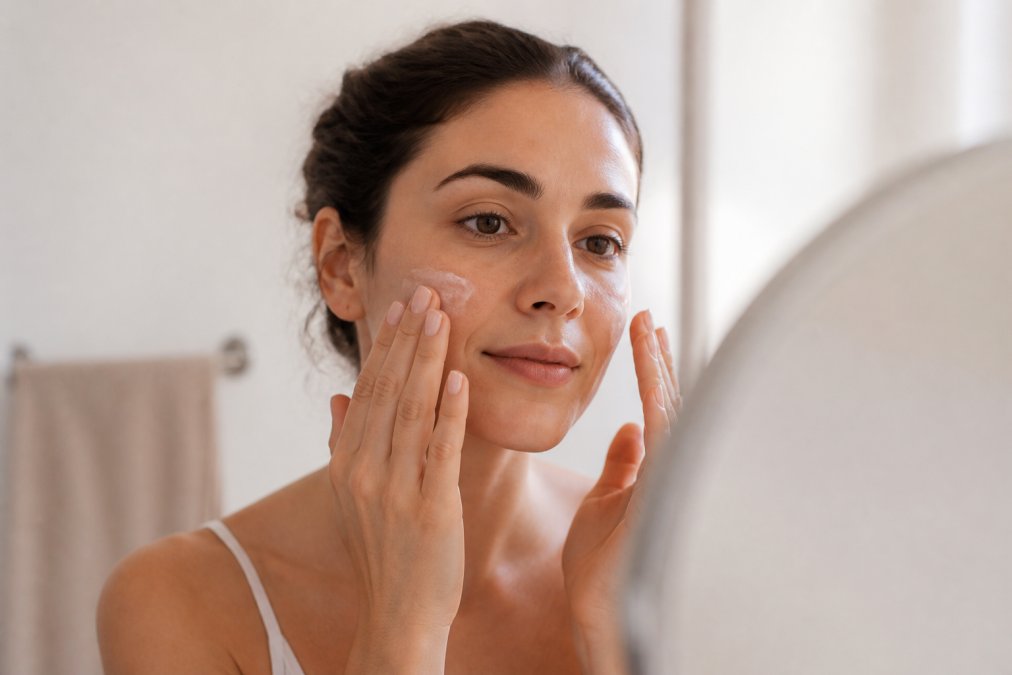
Cleansing without stripping the skin barrier
Cleanse twice daily with a non-lathering, fragrance-free cleanser. The FACE REALITY Barrier Balance Creamy Cleanser removes makeup and impurities without disrupting the barrier. Use lukewarm water, never hot. Apply cleanser with your fingertips for 30 seconds, then rinse thoroughly. Pat dry gently, don't rub.
After cleansing, your skin is most receptive to treatment products. Apply hydrating toners, essences, serums, or targeted treatments. Wait 30-60 seconds for skin to dry slightly before applying the next layer.
Sun protection with mineral blockers
Broad-spectrum SPF 30 or higher is non-negotiable, even on cloudy days. Mineral sunscreens with zinc oxide or titanium dioxide are generally safer for reactive skin than chemical sunscreens. Apply sunscreen as the last step in your morning routine after all serums and moisturizers have dried. Reapply every two hours if you're outdoors.
Daily Routine Structure:
| Step | Product Type | Frequency | Purpose |
|---|---|---|---|
| 1 | Gentle cleanser | 2x daily | Remove impurities without stripping |
| 2 | Hydrating toner or essence | 2x daily | Add humectants and prepare skin |
| 3 | Barrier-repair serum | 2x daily | Deliver ceramides and niacinamide |
| 4 | Moisturizer with occlusive | 2x daily | Seal hydration and protect barrier |
| 5 | Mineral sunscreen | Morning only | Protect from UV damage |
Keep this structure for at least 6-8 weeks before considering any additions. During this stabilization phase, your only goal is barrier repair.
Managing Sensitivity in Different Climates and Seasons
Your sensitive skin's needs shift with environmental conditions. Cold, dry climates increase transepidermal water loss dramatically. In winter, layer hydrating products more heavily and add an extra occlusive at night. Consider a richer moisturizer or facial oil over your regular moisturizer.
Hot, humid climates present different challenges. Sweat, sunscreen, and humidity create an environment where bacteria thrive. In summer, focus on lightweight hydration and frequent cleansing. Use gel-based moisturizers instead of creams. Prioritize sun protection because UV exposure triggers inflammation in sensitive skin.
Seasonal transitions are when many people experience flares. Temperature fluctuations stress the barrier. Reduce active ingredients during transitions and focus on stabilization.
Altitude affects skin significantly. Higher altitudes have lower humidity and higher UV exposure. If you travel to high altitude, increase hydration and sunscreen immediately.
Air quality matters too. Pollution introduces free radicals and irritants. On high-pollution days, cleanse more thoroughly and consider an antioxidant serum.
Conclusion
Safe skincare for highly sensitive skin starts with understanding that your barrier is broken and needs rebuilding, not masking. Strip away irritants, provide ceramides and humectants, and give your skin time to heal. Patience beats trendy actives every time.
At OC Skin Source, we've curated medical-grade products specifically for this journey. The PCA SKIN CliniCalm™ 1% and Dual Action Redness Relief target acute inflammation while supporting barrier repair. The ANFISA SKIN ÂN-BALM provides deep hydration and nourishment. The FACE REALITY Barrier Balance Creamy Cleanser removes impurities without stripping. These are tools selected by a licensed esthetician for efficacy and safety. View all brands →
Frequently Asked Questions
Q: What is the best skincare for extremely sensitive skin?
A: The best skincare for highly sensitive skin prioritizes a fragrance-free, hypoallergenic approach with ceramides, niacinamide, and squalane to strengthen the skin barrier. Look for products labeled non-comedogenic and dermatologist-tested. PCA SKIN CliniCalm 1% ($65) and Dual Action Redness Relief ($128) are specifically formulated to calm reactive skin with hydrocortisone and barrier-supporting ingredients. Start with a minimal routine: a gentle creamy cleanser, a hydrating serum, and a protective moisturizer. Avoid actives like retinoids and AHA/BHA until your barrier is fully repaired.
Q: How do you repair a damaged skin barrier safely?
A: Repair a damaged skin barrier by using products with occlusives, emollients, and humectants that work together to lock in hydration. Ceramides and hyaluronic acid reduce transepidermal water loss while squalane provides nourishment. ANFISA SKIN ÂN-BALM Radiant Hydra-Balm ($150) combines these elements in a balm-to-oil formula. Avoid exfoliation, harsh cleansers, and fragrance during repair. Use pH-balanced products only. Apply moisturizer to damp skin immediately after cleansing to seal in hydration. Most barrier repair takes 4-6 weeks with consistent, gentle care.
Q: What ingredients should be avoided if you have highly sensitive skin?
A: Avoid fragrance (including essential oils), alcohol, sulfates, and strong exfoliants like AHA/BHA if your skin is severely compromised. Skip retinoids until your barrier is strong. Limit phenoxyethanol and parabens if you have contact dermatitis. Avoid products with high concentrations of vitamin C, benzoyl peroxide, or salicylic acid on reactive skin. Physical scrubs and clay masks can trigger inflammation. Always check for non-comedogenic labeling and avoid products with dyes or synthetic colorants. Patch test any new product before full application.
Q: How do I know if a skincare product is safe for sensitive skin?
A: Look for fragrance-free, hypoallergenic, and non-comedogenic labels on the packaging. Check the ingredient list for known irritants like alcohol, fragrance, and sulfates. Dermatologist-tested products are more reliable than untested alternatives. Medical-grade brands like PCA SKIN and ANFISA SKIN are selected for their professional standards. Read reviews from people with rosacea or contact dermatitis to see real-world results. Always patch test on your inner arm or behind your ear for 24-48 hours before applying to your face. If you're unsure, consult a licensed esthetician or dermatologist.
Q: What is the 4-2-4 rule in skincare?
A: The 4-2-4 rule is a patch testing guideline: apply a new product to a small area for 4 days, then wait 2 days without use, then apply again for 4 days. This helps identify delayed reactions or irritation that might not appear immediately. For highly sensitive skin, extend this to 7-7-7 (7 days on, 7 days off, 7 days on) to be extra cautious. Watch for redness, itching, burning, or rash during each phase. If any reaction occurs, stop immediately and return to your baseline routine. This method is especially important when introducing actives or new hydrating ingredients.
Q: How should I transition to new skincare products with sensitive skin?
A: Introduce one new product at a time, spacing introductions 1-2 weeks apart so you can identify any triggers. Start with the gentlest product first (cleanser, then hydrating serum, then moisturizer). Use the new product every other day for the first week, then daily if tolerated. Avoid introducing multiple actives or new products simultaneously. Keep your baseline routine stable during transitions. If irritation occurs, stop the new product and return to your proven routine. Document which products work and which cause reactions to build your safe-product list over time.
Q: Can I use actives like retinoids or vitamin C if I have sensitive skin?
A: Only introduce actives after your skin barrier is fully repaired and stable. Start with gentler options like azelaic acid (ANFISA SKIN ÂN-DEW 10% Azelaic Acid + PHA Serum, $196) or low-strength PHA exfoliants rather than retinoids or vitamin C. Use actives 1-2 times per week initially, increasing frequency only if well-tolerated. Always follow with a rich moisturizer and sunscreen. Avoid combining multiple actives. If your skin becomes red, itchy, or irritated, discontinue and return to a calming routine. Consult a dermatologist before using strong actives on reactive skin.
Q: What role does hydration play in managing sensitive skin?
A: Hydration is critical for sensitive skin because it strengthens the skin barrier and reduces inflammation. Products with hyaluronic acid, glycerin, and squalane draw moisture into the skin while occlusives seal it in, reducing transepidermal water loss. Dehydrated skin is more reactive and prone to irritation. Apply hydrating products to damp skin and layer with a protective moisturizer. Drink adequate water and avoid over-cleansing, which strips natural oils. In dry climates, use heavier moisturizers and consider a humidifier. Well-hydrated skin is more resilient and less likely to flare up from minor triggers.
This article was written using GrandRanker