
Professional Grade Eye Cream: Your Routine Guide
Why Professional Grade Eye Creams Change Your Routine
The skin around your eyes is the thinnest on your body. It shows age, fatigue, and sun damage before the rest of your face does.
Professional grade eye creams differ from drugstore options in one key way: concentration.
This guide covers exactly how to apply eye cream, when to use it, and how to layer it with the rest of your routine.
How to Apply Eye Cream Correctly in 6 Steps
Applying eye cream correctly takes about 30 seconds. The technique matters more than the product for avoiding irritation and getting results.
Here is how to apply eye cream correctly:
- Wash and dry your face gently
- Squeeze a pea-sized amount onto your ring finger
- Dot the cream along your orbital bone
- Pat, never rub, until absorbed
- Repeat on the other eye
- Wait two minutes before makeup
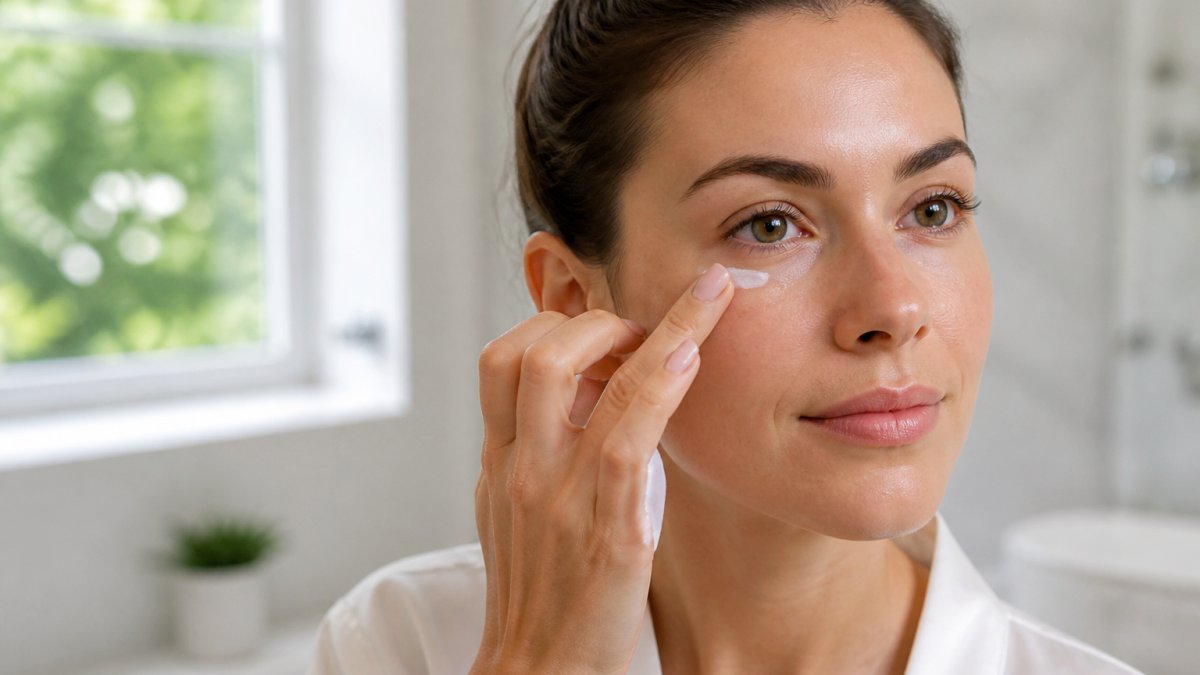
The Pea-Sized Amount and Ring Finger Technique
A pea-sized amount is all you need for both eyes. More product does not mean better results. It means wasted cream and a higher chance of milia, tiny hard bumps under the skin.
Your ring finger is the weakest finger on your hand. That makes it the safest tool for the eye contour. It applies the least pressure, which protects fragile skin from pulling and stretching.
Where to Apply: Orbital Bone, Lash Line, and Eyelids
The orbital bone is the ridge you can feel under your eye. Dot product along this bone, not directly under the lash line. The cream will migrate upward on its own.
Keep product about half an inch from your lash line. Some formulas, like the PCA SKIN Ideal Complex Revitalizing Eye Gel, are made to go on the eyelids too.

When to Apply Eye Cream in Your Skincare Routine
Apply eye cream after your serum and before your moisturizer. This order lets the thin formula absorb first, then seals it in with a heavier cream.
The full order looks like this:
- Cleanser
- Toner
- Eye cream or eye serum
Getting the order right matters. If you apply moisturizer first, it blocks the eye cream from reaching your skin. For more on building a full routine, the American Academy of Dermatology's skincare guidance outlines a simple daily plan.

Eye Cream Morning and Night: Building Both Routines
Eye cream morning and night serve two different jobs. Your morning product protects. Your night product repairs.
In the morning, look for vitamin C, niacinamide, or antioxidants. The PCA SKIN Vitamin B3 Eye Brightening Cream uses 5% niacinamide to brighten and shield the eye area.
At night, richer formulas go to work while you sleep. This is when your skin repairs itself. A hydrating eye cream supports that process.
| Time | Goal | Look For |
|---|---|---|
| Morning | Protect and brighten | Vitamin C, niacinamide, antioxidants |
| Night | Repair and hydrate | Hyaluronic acid, peptides, ceramides |
Consistency beats intensity. Using eye cream twice a day, every day, gives better results than using a strong product once a week.
Choosing an Eye Cream for Under-Eye Bags and Dark Circles
The best eye cream for under-eye bags depends on what is causing them. Puffiness, dark circles, and fine lines each need a different approach. Before you match a formula to a concern, though, it helps to understand what separates a professional grade product from a mass-market one, because the label rarely says it outright.
What "Professional Grade" Actually Means
There is no government standard for the phrase "professional grade." It is a marketing term, not a regulated one. What it usually signals in practice is a combination of three things:
- Higher active concentration. A professional formula may use 5% niacinamide where a drugstore cream uses 1%, or a stabilized retinol where a mass product uses a trace amount for label decoration.
- Better delivery systems. Encapsulation, time-release, and airless packaging protect unstable actives like vitamin C and retinol so they stay potent to the last pump.
- Fewer filler ingredients. Shorter, more purposeful ingredient lists reduce the odds of irritation on thin eye-area skin.
None of that is guaranteed by the word on the box. You have to read the ingredient list to confirm it.
How to Read an Eye Cream Label
Ingredient lists are ordered by concentration, highest first. Ingredients at 1% or less can be listed in any order after the preservative or the "and" point. That means an active near the bottom may be present only in trace amounts.
A few practical checks:
- Look for the active in the first five to eight ingredients if you want a meaningful dose.
- Check for a percentage when the brand provides one. "5% niacinamide" tells you more than "niacinamide."
- Watch for alcohol denat and fragrance high on the list if your skin is reactive.
Matching Formulas to Concerns: Puffiness, Firmness, and Tone
Match your formula to your main concern:
HYDRINITY - Eye Renew Complex (0.5 oz) →
- Puffiness: look for caffeine, peptides, and barrier-supporting ingredients that reduce fluid retention
- Firmness: peptides and regenerative technology help lift and tighten over time
- Tone: niacinamide and botanical brighteners even out discoloration
- Fine lines: retinoids and hydrating humectants like hyaluronic acid
The HYDRINITY Eye Renew Complex targets fine lines, puffiness, and under-eye darkness with a lightweight formula gentle enough for sensitive skin. For firmness and lift, the OURSELF Advanced Regenerative Eye Serum covers the under-eye area, eyelids, and crow's feet.

What Topicals Can and Cannot Fix
Set expectations before you buy. Topical eye creams can improve hydration, the appearance of fine lines, surface tone, and mild puffiness. They cannot remove under-eye bags caused by fat herniation, erase deep structural wrinkles, or correct dark circles driven by genetics or visible vessels. Those concerns often need in-office treatment. A good formula improves skin quality; it does not restructure anatomy.
Layering Professional Grade Eye Cream With Your Full Routine
Layering professional grade eye cream takes patience, not skill. The rule is simple: thinnest product first, thickest last. But the order is only half the job. The other half is making sure the actives you put near your eyes do not fight each other.
The Full Layering Order
Work from lightest to heaviest, and give each layer a moment to settle:
- Cleanser, pat dry, do not rub
- Toner or essence, optional, skip if it contains exfoliating acids
- Eye serum, if you use one, this goes before cream
- Face serum, apply to the face, not the eye area
- Eye cream, pat along the orbital bone
- Moisturizer, apply around, not over, the eye cream
- Sunscreen, every morning, up to the orbital bone
If you use an eye serum and an eye cream, apply the serum first. Wait about a minute. Then pat on the cream to seal it in. This is how you get the benefits of both without piling on too much.
Ingredient Compatibility Around the Eyes
Not every active plays well with others, and the eye area is the least forgiving place to find out.
- Retinol + vitamin C: use at different times of day. Vitamin C in the morning, retinol at night.
- Retinol + exfoliating acids (AHA/BHA): do not stack on the same night. Acids thin the barrier and make retinol irritation more likely.
- Retinol + benzoyl peroxide: benzoyl peroxide can deactivate retinol. Keep them apart.
- Vitamin C + niacinamide: the old "they cancel out" claim is outdated. Modern formulas tolerate each other well. If your skin stings, separate them.
Introducing Actives Without Irritation
Introduce one new active at a time, and give it two weeks before adding another. Start with two nights a week for retinol, then build up as tolerated. If you feel stinging, back off to every third night rather than pushing through.
A common pattern is to sandwich a retinol eye product between two layers of a plain moisturizer, moisturizer, retinol, moisturizer, to buffer the dose while your skin adapts.
When to Apply Around Makeup and Contact Lenses
Let eye cream absorb fully, about two minutes, before applying concealer, or it will pill and crease. Contact lens wearers should insert lenses before applying eye cream, or wait until after removing them, so product does not migrate onto the lens.
Irritation, Sensitivity, and When to Stop Use
Mild tingling can be normal for the first few days. Burning, redness, or swelling is not.
Sensitive skin does better with fragrance-free formulas and simple ingredient lists. Patch test on your inner arm before using anything near your eyes.
Contact lens wearers should apply eye cream before inserting lenses, or wait until after removing them. This keeps product from transferring onto the lens.
If irritation does not clear up after you stop the product, see a dermatologist. The FDA's guidance on cosmetic reactions explains when a reaction needs medical attention.
How Long Until You See Results? Setting Realistic Expectations
Most eye creams need four to eight weeks of daily use before you see real changes. Hydration improves within days. Firmness and dark circles take longer.
Here is what to expect:
- Days 1-7: skin feels softer and more hydrated
- Weeks 2-4: fine lines look slightly smoother
- Weeks 4-8: firmness and tone improve
- Beyond 8 weeks: continued gains with consistent use
No eye cream erases deep wrinkles or removes under-eye bags overnight. Anyone promising that is selling hope, not skincare. What a good formula does is improve skin quality over time, so the eye area looks rested and healthy.
Frequently Asked Questions
How much eye cream should you use each time?
A pea-sized amount is enough for both eyes. Using more does not speed up results and can cause product to migrate into your eyes, leading to irritation. Dot a tiny amount along the orbital bone on each side, then gently pat with your ring finger until absorbed. If you are using a serum-textured product, such as a lightweight eye serum, you may need even less than a full pea-sized drop per eye.
Can you use eye cream in the morning and at night?
Yes. Many formulas are designed for twice-daily use. In the morning, apply eye cream before sunscreen so the eye area stays protected. At night, apply it after your serum but before a richer moisturizer. If your eye cream contains active ingredients like retinol, start with evening use only and build tolerance before adding a morning application.
When should you apply eye cream in your skincare routine?
Apply eye cream after cleansing, toning, and any face serums, but before your facial moisturizer and sunscreen. This order lets lighter products absorb first and gives the eye cream a chance to sit on the delicate skin without being diluted. At night, the same sequence applies: cleanse, treat, eye cream, then moisturizer.
How long does it take for eye cream to show results?
Hydration and immediate smoothing effects can appear within days. Visible changes in puffiness, dark circles, or fine lines typically take four to twelve weeks of consistent use, depending on the formula and your skin. Products with peptides or niacinamide often show gradual improvements over the first month. Take a photo in the same lighting each week to track real progress rather than relying on memory.
The eye area is the first place to show fatigue and aging, and it is the easiest place to get wrong. With the right technique, the right order, and a formula matched to your concerns, you can protect that delicate skin for years. At OC Skin Source, every eye cream is personally reviewed by licensed esthetician Sasha Young, so you get professional-grade options without the guesswork. Browse our curated eye treatments to find the formula that fits your routine.