
How Do You Prevent Premature Skin Aging Daily?
Quick Summary
To prevent premature skin aging daily, apply a broad-spectrum sunscreen with SPF 30 or higher every morning and reapply every two hours outdoors. At night, cleanse away sunscreen and pollution, then use a retinal or retinoid two to three nights a week, building up gradually. Gentle cleansing, antioxidants, moisturizer, and 7-9 hours of sleep complete the routine.
- Use about two finger-lengths of sunscreen for the face and neck, or a nickel-sized amount for the face alone.
- Reapply sunscreen every two hours outdoors and sooner after swimming, heavy sweating, or toweling off.
- Start retinal or retinoid two to three nights a week and build up rather than jumping to nightly use.
- Choose mineral sunscreens with zinc oxide for sensitive skin, and patch test new actives on the jawline first.
- See a dermatologist promptly for any new or changing spot, mole, or lesion.
What Causes Premature Skin Aging?
Premature skin aging is the visible breakdown of skin texture, tone, and firmness that happens earlier than genetics alone would predict.
Two forces drive it. The first is photoaging, which is skin aging caused by repeated exposure to UV radiation. UVA rays reach deep into the dermis and break down collagen and elastin over time, while UVB rays cause surface burns.
The second force is internal. Smoking, poor sleep, stress, and a diet high in refined sugar and processed foods all speed up the breakdown of collagen.
Environmental exposures beyond sunlight matter too. Air pollution and blue light from screens add oxidative stress, which creates free radicals that damage the skin barrier.
If sun damage is already visible, our guide on how to repair sun damaged skin walks through the recovery process in detail.
Habits That Make Skin Age Faster
The biggest mistake we see is treating aging skin as a product problem. It is usually a habit problem. These are the habits that make skin age faster than it should:
- Skipping daily sunscreen. One unprotected lunch hour outdoors adds up over years.
- Tanning, including indoor tanning. There is no safe tan. Both damage DNA in skin cells.
- Smoking and tobacco use. Smoking narrows blood vessels and starves skin of oxygen.
- A high-sugar diet. Refined sugar and processed foods drive glycation, which stiffens collagen.
- Crash dieting and dehydration. Skin needs steady hydration to stay plump.
- Poor sleep and chronic stress. Cellular repair happens mostly at night.
- Harsh cleansing. Stripping the skin barrier leaves skin irritated and vulnerable.
The good news: every one of these is changeable, and improvements show up faster than most people expect.
Choosing Sunscreen for Premature Aging Prevention
The best sunscreen for premature aging is a broad-spectrum formula with SPF 30 or higher, applied every morning. Broad-spectrum matters more than the SPF number alone. SPF measures UVB protection, but you also need confirmed UVA coverage, because UVA rays are the ones that reach the dermis and break down collagen and elastin.
Look for these on the label:
- Broad-spectrum on the front, plus a PA rating for UVA protection
- SPF 30 to 50, reapplied every two hours outdoors
- Mineral filters like zinc oxide or titanium dioxide for sensitive skin
- Water resistance if you swim or sweat
How Much to Apply
Application is where most people lose the battle. Use about two finger-lengths for the face and neck, or roughly a nickel-sized amount for the face alone. Most adults apply far less than the label amount, which drops real-world protection well below the stated SPF. A common pattern is applying about a quarter of the tested amount, which can leave you with a fraction of the protection you think you have.
When to Reapply
Reapply every two hours during continued outdoor exposure, and sooner after swimming, heavy sweating, or toweling off. Indoors near windows, a single morning application is usually enough for incidental exposure, but reapply before any extended time outside.
Cloudy Days and Indoor Light
UV rays pass through clouds, so a cloudy day is not a pass. UVA also passes through window glass, which means a desk near a window or a long drive adds cumulative exposure. Sunscreen every morning covers both cases without requiring you to track the weather.
Reading the Label Correctly
SPF is a UVB measure, not a total protection score. A PA rating tells you about UVA. "Water-resistant for 80 minutes" means exactly that, not all day. The U.S. Food and Drug Administration explains how these label claims are regulated, which helps you compare formulas without marketing distortion.
A formula we recommend is OURSELF Intelligent Defense Mineral Sunscreen Broad Spectrum SPF 50. It uses non-nano zinc oxide with a PA++++ rating, the highest UVA rating available, and adds niacinamide and peptides for firmness and tone. It is water-resistant for up to 80 minutes.

Building a Daily Anti-Aging Skincare Routine
A daily anti-aging skincare routine works best when it is simple enough to repeat. The goal is protection during the day and repair at night. Skip the ten-step routines. Consistency beats complexity every time.
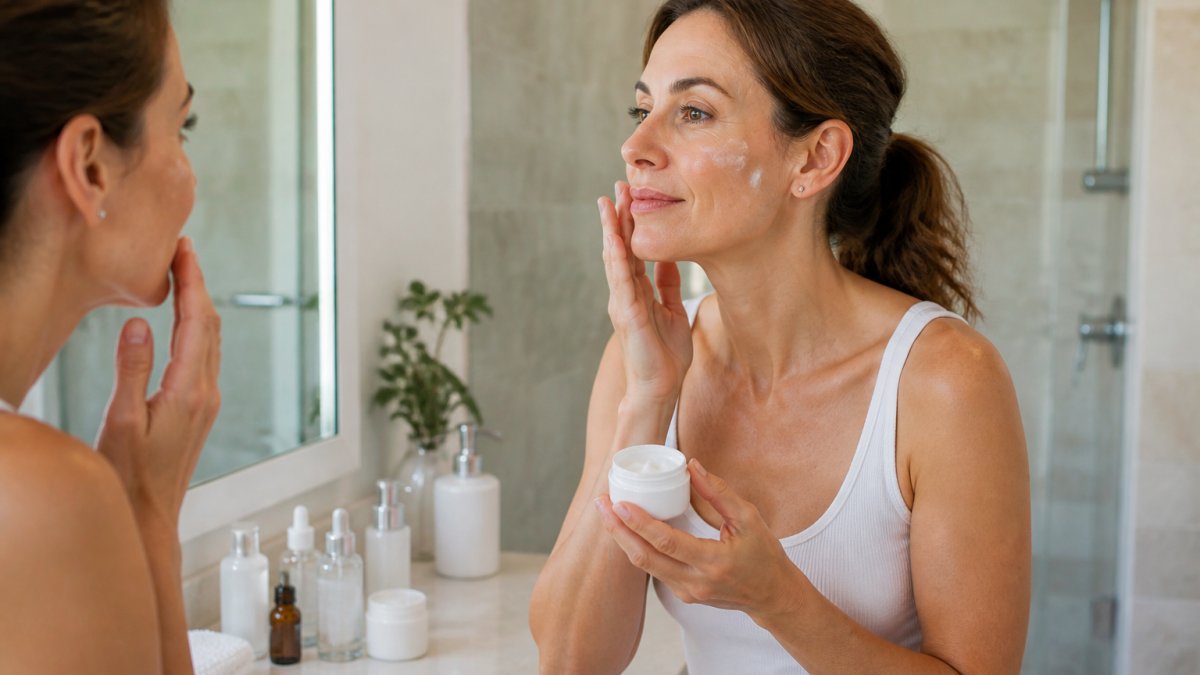
For a deeper walkthrough, see our full guide on how to build an anti-aging skincare routine.
A Repeatable Weekly Schedule
Most people do better with a written schedule than with a shelf of products. A practical pattern looks like this:
| Time | Step | Frequency |
|---|---|---|
| Morning | Gentle cleanse | Every day |
| Morning | Antioxidant (vitamin C) | Every day |
| Morning | Moisturizer | Every day |
| Morning | Broad-spectrum sunscreen | Every day, reapply outdoors |
| Evening | Cleanse to remove sunscreen and pollution | Every night |
| Evening | Retinal or retinoid | 2-3 nights, building up |
| Evening | Moisturizer | Every night |
The order matters more than the number of products. Thinner textures go first, sunscreen goes last in the morning, and treatments go before moisturizer at night.
Morning Steps That Protect
Morning is about defense. Follow this order:
OURSELF - Intelligent Defense Mineral Sunscreen Broad Spectrum SPF 50 (50 ml) →
- Cleanse gently with a non-stripping cleanser.
- Apply an antioxidant such as vitamin C to neutralize free radicals.
- Moisturize to support the skin barrier.
- Finish with broad-spectrum sunscreen as the last step.
Our HYDRI-C Daily Vitamin C Moisturizer combines antioxidant protection with daily hydration in one product.
Evening Steps That Repair
Evening is about repair. Cleansing comes first, always, to remove sunscreen and pollution. Then apply your treatment, then a moisturizer to seal it in.
Retinal is one of the most effective anti-aging ingredients available. Our HYDRINITY RetaXome Daily Retinal Hydrator pairs retinaldehyde with a delivery technology designed to reduce the irritation typical of retinoids, which makes it easier to use nightly.

Start two to three nights a week and build up. A common mistake is jumping straight to nightly use and quitting when skin reacts. If you miss a night, resume where you left off rather than restarting from scratch.
What the Evidence Supports, and What It Does Not
Not every step carries the same weight. Sun protection has the strongest and most consistent evidence for preventing visible premature aging. Not smoking and limiting alcohol are also well supported. Antioxidants and retinoids have good evidence for improving texture and tone, though results vary by person and formula.
Weaker claims deserve skepticism. Most "detox" products, collagen drinks, and at-home devices have limited independent evidence for preventing aging, and some are marketed with claims that outrun the data. A reasonable approach is to invest in the steps with the strongest support first, then add others as budget and patience allow.
How to Prevent Premature Skin Aging Daily: The Full Checklist
The short answer: how to prevent premature skin aging daily comes down to a repeatable set of habits, not a single product. Use this checklist as your daily standard.
| Habit | When | Frequency |
|---|---|---|
| Broad-spectrum sunscreen | Morning, reapplied outdoors | Every day |
| Gentle cleansing | Morning and night | Twice daily |
| Antioxidant serum or moisturizer | Morning | Every day |
| Retinal or retinoid treatment | Evening | 2-3 nights, building up |
| Facial moisturizer | Morning and night | Twice daily |
| Seek shade and wear protective clothing | Peak sun hours | Every day outdoors |
| Eat fruits, vegetables, leafy greens, oily fish | Meals | Most days |
| Limit refined sugar and processed foods | Meals | Most days |
| Avoid smoking and tobacco | All day | Every day |
| Aim for 7-9 hours of sleep | Night | Every night |
| Regular exercise and stress management | Weekly | Most days |
Print it, stick it on the bathroom mirror, and check it off. Measurable habits stick better than vague intentions.
Adapting Your Routine for Sensitive or Reactive Skin
Sensitive skin needs the same protection and repair steps, just delivered more gently. The mistake is quitting anti-aging actives entirely. The fix is choosing the right forms.
- Choose mineral sunscreens with zinc oxide, which tend to irritate less than chemical filters.
- Patch test new actives on the jawline for a few nights before full-face use.
- Buffer retinoids by applying moisturizer first, then the treatment.
- Avoid stacking actives like retinal and strong acids on the same night.
- Look for soothing ingredients such as allantoin, bisabolol, and niacinamide.
If your skin is reactive, our roundup of the best anti-aging serums for sensitive skin is a useful next stop.
When to Seek Professional Advice
See a licensed dermatologist or esthetician when at-home care stops delivering results. Specific signs to watch for:
- A new or changing spot, mole, or lesion, which needs a dermatologist promptly
- Persistent redness, flushing, or breakouts that suggest rosacea
- Deep wrinkles or laxity that topical products cannot reach
- Dark patches that do not fade with consistent sun protection
Professional treatments like lasers, chemical peels, and microneedling can address damage that creams cannot. They work best alongside, not instead of, a daily routine.
The American Academy of Dermatology publishes guidance on skin cancer warning signs and when to book a skin check. The U.S. Food and Drug Administration also explains how sunscreen labels work, which helps you read SPF and broad-spectrum claims correctly.
Shop Esthetician-Selected Products for Your Anti-Aging Routine
Preventing premature skin aging is not complicated. It is repetitive. Protect every morning, repair every evening, and let the small habits compound over months and years.
That is where OC Skin Source comes in. Every product on our site is personally reviewed and selected by licensed esthetician Sasha Young, so you are not guessing which formula suits your skin.
Start with the Environmental Protection Agency's sun safety guidance for the exposure basics, then build your routine with products that do the work.
Frequently Asked Questions
How can I prevent premature skin aging every day?
The core daily steps are broad-spectrum sunscreen with SPF 30 or higher, reapplied every two hours outdoors, plus a retinoid at night to support cell turnover and collagen. Add an antioxidant like vitamin C in the morning, keep skin cleansed and moisturized, and skip smoking and tanning beds. Consistency matters more than the number of products: a short routine you follow every day beats an elaborate one you use twice a week.
Does sunscreen really help prevent premature skin aging?
Yes. UV radiation is the leading driver of photoaging, the process behind wrinkles, age spots, and lost elasticity. Daily broad-spectrum sunscreen protects against both UVA rays, which reach deeper and drive long-term damage, and UVB rays, which cause burning. Choose a formula rated SPF 30 or higher with a PA rating for UVA coverage, apply about two finger-lengths to the face and neck, and reapply after swimming, sweating, or two hours of sun exposure.
Can smoking and poor sleep make skin age faster?
Both are well-documented habits that make skin age faster. Smoking narrows blood vessels and reduces oxygen and nutrient flow to the skin, which contributes to fine lines and dullness. Poor sleep limits the overnight cellular repair window, and chronic stress raises cortisol, which can break down collagen over time. Quitting smoking, aiming for seven to nine hours of sleep, and managing stress are practical ways to support skin health alongside your topical routine.
What should a daily anti-aging skincare routine include?
A workable routine has four parts. Morning: a gentle cleanser, an antioxidant such as vitamin C, a moisturizer, and broad-spectrum sunscreen. Evening: cleanse, apply a retinoid like retinaldehyde, then a hydrating moisturizer or serum. Once or twice a week, add exfoliation if your skin tolerates it. Sensitive skin should introduce the retinoid two or three nights a week first. A serum with hyaluronic acid helps offset dryness while your skin adjusts.
