
Medical Grade Skincare for Sun Damage: 2026 Guide
Table of Contents
- What Makes Medical Grade Skincare Different for Sun Damage
- How UVA/UVB Rays Cause Photodamage Across Skin Layers
- Best Medical Grade Vitamin C Serum for Sun Damage
- How to Use Retinol for Sun Damaged Skin Without Irritation
- Dermatologist Recommended Skincare Routine for Hyperpigmentation
- Ingredient Synergy and Contraindications to Avoid
- Budget-Conscious Medical Grade Alternatives That Still Work
- Post-Procedure Maintenance After Laser or Chemical Peels
- Frequently Asked Questions
Last Updated: September 24, 2026
What Makes Medical Grade Skincare Different for Sun Damage
Medical grade skincare for sun damage uses higher concentrations of actives than mass-market formulas, often sold through licensed professionals. This guide from OC Skin Source explains how those formulas work and how to build a routine that fades photodamage.
Prescription-Strength Ingredients vs. Drugstore Formulas
- Concentration: Medical-grade serums often carry actives at levels that require professional guidance.
- Delivery systems: Encapsulation and lipid-soluble forms help ingredients penetrate rather than sit on the surface.
- Testing: Clinical testing is standard for this category, not an afterthought.
A common mistake is assuming a drugstore product with the same named ingredient performs the same way. It rarely does. Percentage and delivery determine whether an active reaches the dermal layers or simply coats the epidermis. For a broader look at how professional formulas are selected, see the American Academy of Dermatology's guidance on skincare products.
How UVA/UVB Rays Cause Photodamage Across Skin Layers
Photodamage is the cumulative structural change to skin caused by ultraviolet exposure, and it affects each layer differently. UVA rays penetrate deeper and drive photoaging; UVB rays hit the surface and cause burning. Understanding each depth explains why certain ingredients work for some signs of damage but not others.
Epidermal Damage: Pigmentation and Texture Changes
The epidermis takes the most direct UV hit. UVB radiation is absorbed primarily here, damaging keratinocytes and triggering protective responses.
Dermal Damage: Collagen Breakdown and Wrinkling
The dermis is where photoaging does its most lasting damage. UVA rays penetrate here and trigger matrix metalloproteinases (MMPs), enzymes that break down collagen and elastin, a process called collagenolysis.
The Dermal-Epidermal Junction: The Overlooked Layer
Between the epidermis and dermis sits the dermal-epidermal junction (DEJ), a thin, wavy boundary anchoring the two layers. UV exposure flattens it over time, weakening the connection.
- Skin fragility: The layers separate more easily, leading to tearing and bruising with minor trauma.
- Pigment incontinence: Melanin from damaged epidermal cells can drop into the dermis, creating pigment that topical products cannot reach.
- Reduced nutrient exchange: The DEJ is where nutrients pass between layers; damage here impairs skin repair capacity.
Why This Matters for Your Routine
Matching ingredients to damage depth is the difference between a routine that works and one that wastes money:
| Damage Type | Visible Sign | Effective Ingredients |
|---|---|---|
| Epidermal pigment | Sun spots, uneven tone | Vitamin C, azelaic acid, tranexamic acid, niacinamide |
| Epidermal texture | Roughness, dullness | Retinoids, AHAs, physical exfoliation |
| Dermal collagen loss | Wrinkles, laxity | Retinoids, peptides, in-office procedures |
| DEJ degradation | Fragility, dermal pigment | Retinoids, microneedling, laser |
Best Medical Grade Vitamin C Serum for Sun Damage
The best medical grade vitamin C serum for sun damage combines a stable form of vitamin C with supporting antioxidants, since unstable formulas oxidize before they help. Two options stand out.
| Serum | Key Actives | Best For | Price |
|---|---|---|---|
| Marini C-ESTA Face Serum | Lipid-soluble vitamin C, DMAE, hyaluronic acid | Fine lines, discoloration, laxity | $145.00 |
| HydroPeptide LumaPro-C Serum | Tetrahexyldecyl Ascorbate, resurfacing peptide | Hyperpigmentation, age spots, dullness | $149.00 |
How to Use Retinol for Sun Damaged Skin Without Irritation
Learning how to use retinol for sun damaged skin without irritation comes down to strength, frequency, and buffering. Start lower than you think you need and increase slowly.
- Begin with two nights per week, not seven.
- Apply a pea-sized amount to dry skin, avoiding the eye area and corners of the nose.
- Buffer with moisturizer first if your skin is reactive.
- Add one night per week only after two weeks without flaking.
- Pause entirely if you get stinging, peeling, or redness that lasts past a day.
Dermatologist Recommended Skincare Routine for Hyperpigmentation
A dermatologist recommended skincare routine for hyperpigmentation splits actives by time of day, because antioxidants and retinoids do not layer well together.
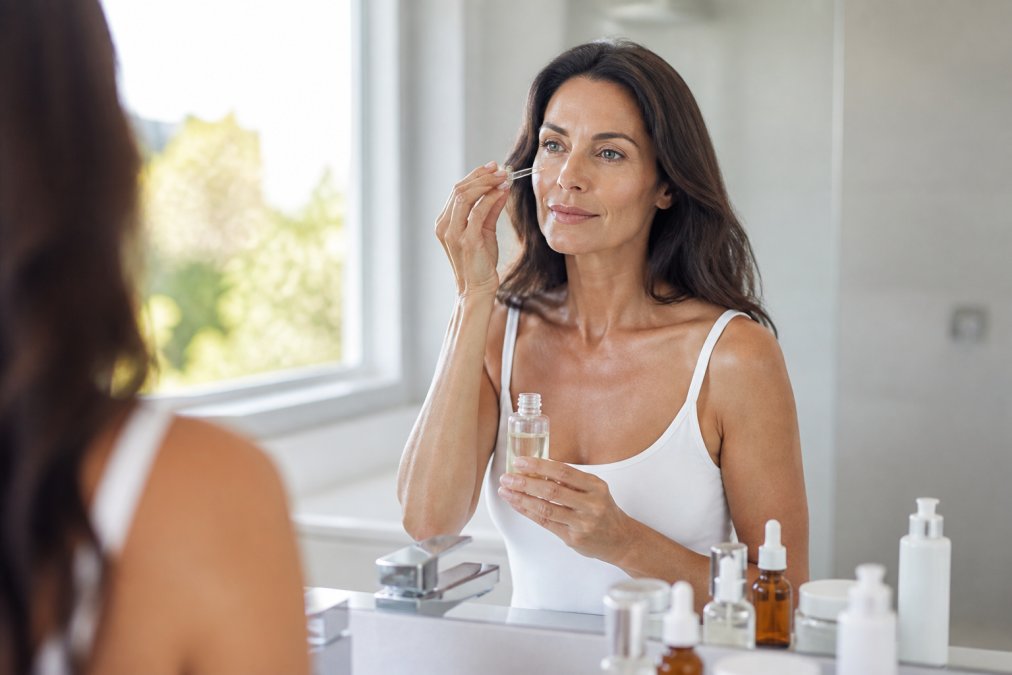
Morning Routine: Antioxidants and Broad-Spectrum SPF
Cleanse gently, apply a vitamin C serum, moisturize, then finish with broad-spectrum SPF 50. The sunscreen step is non-negotiable. Without it, every other product is fighting a losing battle, because new UV exposure keeps triggering fresh melanin production.
Evening Routine: Retinoids and Brightening Agents
At night, cleanse, apply your brightening serum, then your retinoid, then moisturizer. If you use both a pigment serum and a retinoid, alternate nights rather than stacking them.
Ingredient Synergy and Contraindications to Avoid
Ingredient synergy is where most routines quietly fail. Certain pairings amplify results; others cancel each other out or cause harm.
Pairs well:
- Vitamin C + vitamin E + ferulic acid (antioxidant stacking)
- Retinoid + moisturizer (buffering without reducing efficacy)
- Azelaic acid + niacinamide (brightening without irritation)
Keep apart:
- Retinoids and benzoyl peroxide (they degrade each other)
- Retinol and AHA/BHA in the same layer (barrier overload)
- Hydroquinone with high-strength acids (compounding irritation)
Budget-Conscious Medical Grade Alternatives That Still Work
You do not need eleven products. A functional medical-grade routine is four steps: antioxidant, brightener, retinoid, sunscreen.
Where to save money:
PCA SKIN - Pigment Gel Pro (1 oz) →
- Skip the separate eye cream and use your face serum around the orbital bone.
- Buy one brightening serum and use it consistently rather than rotating three.
- Choose a deluxe travel size to test before committing to full size.
Where not to save:
- Sunscreen. This is the product doing the most work for sun damage.
- Retinoid. Cheap retinoids are often poorly stabilized.
Post-Procedure Maintenance After Laser or Chemical Peels
Post-procedure maintenance determines whether your results last or fade within months. Lasers and chemical peels remove existing pigment but do not stop new pigment from forming. This is where most patients lose their investment, and where a structured medical-grade routine makes the difference between results that hold for years and results that fade by next season.
The First 14 Days: Barrier Repair Only
The first two weeks after a procedure are about barrier repair, not actives. Your skin is in a wound-healing state, and introducing ingredients too early can cause irritation, post-inflammatory hyperpigmentation (PIH), or scarring.
What to use:
- Gentle, non-foaming cleanser (no sulfates, no exfoliating beads)
- Heavy moisturizer with ceramides and cholesterol
- Mineral sunscreen only (zinc oxide or titanium dioxide)
- Aquaphor or a similar occlusive on treated areas if your provider recommends it
What to avoid:
- Retinoids (wait at least 7-14 days, longer for deeper procedures)
- AHAs, BHAs, and vitamin C (wait 5-7 days minimum)
- Fragrance, essential oils, and alcohol-based toners
- Physical exfoliation of any kind
Reintroducing Actives: A Phased Approach
Once your provider clears you, reintroduce one active at a time, starting with your brightening serum before your retinoid. Brightening agents like azelaic acid or tranexamic acid are better tolerated than retinoids and help prevent the rebound pigmentation procedures can trigger.
Phase 1 (Days 14-21): Brightening serum
- Apply every other night for the first week
- If no irritation, move to nightly
- Look for hydroquinone-free formulas if you are prone to PIH
Phase 2 (Days 21-28): Retinoid
- Start at the lowest strength available
- Apply twice weekly, buffered with moisturizer
- Increase by one night per week only if no flaking or stinging
Phase 3 (Week 4+): Vitamin C
- Add in the morning, before sunscreen
- Start with a lower percentage (10-15%) if your skin is reactive
Why Medical-Grade Formulas Matter After Procedures
This is where product selection has the highest stakes. Post-procedure skin is more permeable, sensitive, and irritation-prone than at any other time. Formulas chosen for post-procedure skin skip the fragrances, essential oils, and harsh preservatives that cause setbacks.
The Maintenance Routine That Protects Your Investment
Morning:
- Gentle cleanser
- Vitamin C serum (antioxidant protection)
- Moisturizer
- Mineral SPF 50 with iron oxides
Evening:
- Gentle cleanser
- Brightening serum (azelaic acid, tranexamic acid, or niacinamide)
- Retinoid (alternate nights with brightening serum if needed)
- Barrier-repair moisturizer
Quarterly:
- Professional assessment to determine if maintenance treatments are needed
- Adjust actives based on seasonal UV exposure and skin response
OC Skin Source selects products with this stage in mind, since the weeks after a procedure are when most people undo their results. If you are planning a laser or peel, build your post-procedure kit before your appointment.
Frequently Asked Questions
Can medical grade skincare reverse years of sun damage?
Medical grade skincare can significantly improve the appearance of sun damage, but complete reversal isn't realistic. Products with prescription-strength retinoids, hydroquinone alternatives, and high-concentration antioxidants can fade dark spots, smooth texture, and boost collagen production over time. PCA SKIN Pigment Gel Pro, for example, shows visible improvement in discoloration in as little as four weeks. Deeper dermal damage may need professional treatments like laser resurfacing or microneedling alongside your home routine for best results.
What is the best medical grade vitamin C serum for sun damage?
Look for stable, oil-soluble vitamin C forms like tetrahexyldecyl ascorbate or ascorbyl palmitate, which penetrate better and cause less irritation than L-ascorbic acid. HydroPeptide LumaPro-C Serum combines tetrahexyldecyl ascorbate with peptides and a microbiome-activated brightener to target melanin production and uneven tone. Marini SkinSolutions C-ESTA Face Serum uses lipid-soluble vitamin C with DMAE and hyaluronic acid for brightening plus firming. Both address discoloration while supporting the skin barrier.
How long does it take to see results from medical grade skincare for sun damage?
Most people notice initial brightening within four to six weeks of consistent use. PCA SKIN Pigment Gel Pro reports visible discoloration improvement in as little as four weeks. Retinoids typically take eight to twelve weeks to show meaningful changes in texture and fine lines because they work by accelerating cell turnover. Full results from a complete routine, including hyperpigmentation fading and collagen production support, often take three to six months. Consistency with broad-spectrum SPF daily is essential or progress stalls.
What ingredients should I look for to treat sun spots and hyperpigmentation?
Prioritize retinoids like tretinoin or retinol to speed cell turnover, vitamin C for antioxidant protection and melanin inhibition, and azelaic acid or tranexamic acid for brightening. Hydroquinone-free options like PCA SKIN Pigment Gel Pro use SynerPro Complex to target pigmentation through multiple pathways. Niacinamide, kojic acid, and licorice root extract also help. Always pair active ingredients with broad-spectrum sunscreen, because UV exposure undoes pigmentation progress faster than any serum can fix it.