
Do You Need a Medical Dermatology Consultation?
Last Updated: October 27, 2026
Quick Summary
You need a medical dermatology consultation if a skin change lasts more than two or three weeks, hurts, bleeds, or keeps coming back. Get checked promptly for a rapidly changing mole, a sore that bleeds and crusts repeatedly, or a spreading, blistering rash.
- A full-body skin check usually takes 15 to 30 minutes, while a single-lesion visit is often shorter.
- Most biopsy results return within one to two weeks, so ask who will call you.
- Seek emergency care for a rapidly spreading rash with fever or swelling of the lips or throat.
- Book a skin exam within 2-4 weeks for a new or changing mole.
- See a dermatologist after 8-12 weeks if acne is not clearing on over-the-counter products.
Table of Contents
- When to See a Dermatologist: Signs You Need a Medical Dermatology Consultation
- Medical vs. Cosmetic Dermatology
- Skin Changes to Get Checked: The ABCDE Warning Signs
- Persistent Acne, Rashes, and Chronic Conditions That Need Professional Care
- What to Expect at a Dermatology Appointment
- What to Ask a Dermatologist Before and During Your Visit
- How Skin Tone Affects Diagnosis and Treatment
- Booking Your Consultation and Building a Post-Visit Routine
- Frequently Asked Questions
When to See a Dermatologist: Signs You Need a Medical Dermatology Consultation
If a skin change lasts more than two or three weeks, hurts, bleeds, or keeps coming back, it's time to get it checked by a medical professional.
That's the short answer. The longer answer is what this guide covers.
Below, we break down the specific signs that point to a medical dermatology consultation, how to prepare for the visit, and what to do afterward. We'll also show you where cosmetic care ends and medical care begins.
Medical vs. Cosmetic Dermatology
If you're unsure which expert fits your situation, our guide on esthetician vs dermatologist explains how the two roles differ before you book anything.
Skin Changes to Get Checked: The ABCDE Warning Signs
- A: Asymmetry. One half doesn't match the other.
- B: Border. Edges are ragged, notched, or blurred.
- C: Color. More than one shade, or a new color appears.
- D: Diameter. Larger than a pencil eraser.
- E: Evolving. Size, shape, or color changes over time.
Other Symptoms That Warrant a Closer Look
Watch for these too:
- A sore that bleeds, crusts, or won't heal
- New itching, pain, or burning in one spot
- A growth that appears suddenly after age 30
- Any spot that returns after treatment
The American Academy of Dermatology recommends a full-body skin check for anyone with risk factors like fair skin, a family history of skin cancer, or years of sun exposure and indoor tanning.
Persistent Acne, Rashes, and Chronic Conditions That Need Professional Care
- Cystic or hormonal acne that leaves deep bumps and scarring
- Rosacea with flushing, redness, and visible vessels
- Eczema or psoriasis with cracking, scaling, or widespread dry patches
- Hives that recur without a clear trigger
- Rashes that spread, blister, or come with fever
If you're not sure whether your routine or your skin is the problem, read signs your skincare routine is wrong first. And if acne is the main issue, you can browse acne treatments designed to work alongside professional care.
What to Expect at a Dermatology Appointment
Your first visit is mostly information gathering, but the shape of the appointment depends on why you booked it. A focused visit for one spot is different from a full-body skin check, and knowing which you need helps you prepare.
Before the exam: what the dermatologist asks
Expect questions about your medical history, family history of skin cancer, medications (including antibiotics and hormonal treatments), allergies, and your skin-care routine. Bring a list of products you use and note how long you have used each one. If you have photos of a flare-up that has since faded, bring them, a rash that is calm on exam day is still diagnosable from a good photo taken in natural light.
During the exam
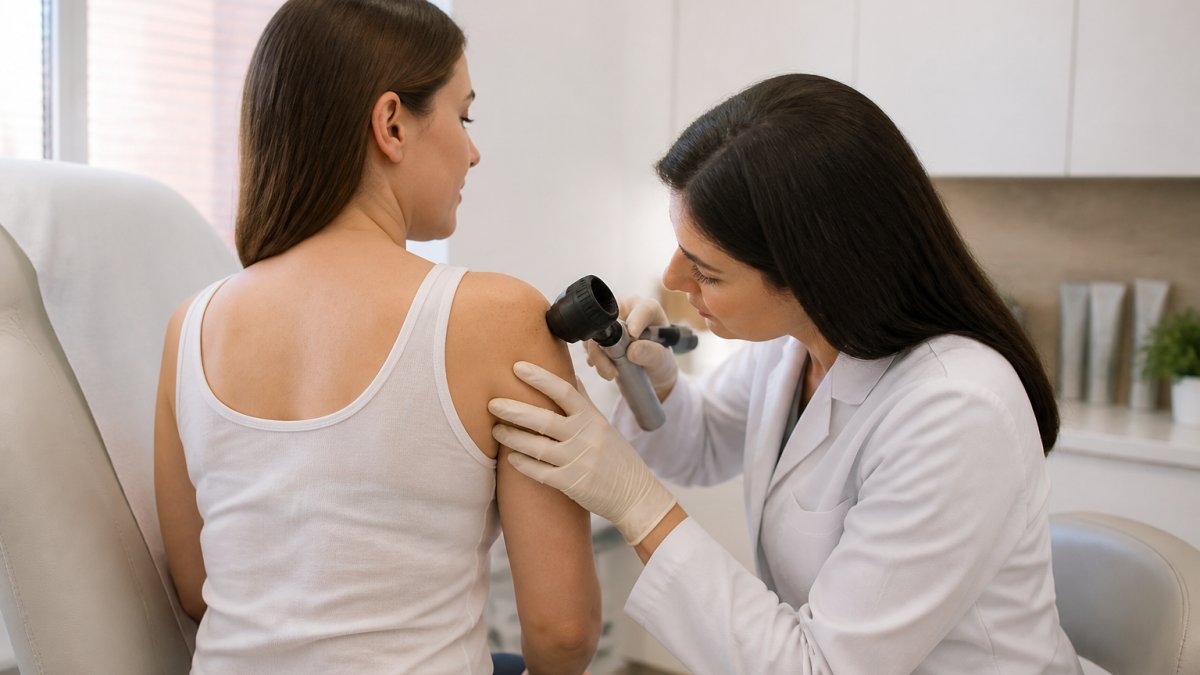
For a focused concern, the dermatologist examines the area and often uses a handheld dermatoscope, a lighted magnifier that shows pigment patterns below the surface. For a full-body skin check, expect to wear a gown and have your scalp, hands, feet, nails, and mucous membranes examined. A full check usually takes 15 to 30 minutes; a single-lesion visit is often shorter.
If something looks suspicious: biopsy and next steps
If a lesion looks concerning, the dermatologist may recommend a biopsy, a small sample sent to a pathology lab. Most results return within one to two weeks. A follow-up decides the next step: monitoring, a repeat excision, or referral. Ask before you leave who will call you with results and what the plan is if the result is abnormal. Proactive vigilance remains the most effective defense against skin cancer, so familiarizing yourself with the nuances of identifying suspicious moles can help you determine when a change in your skin warrants a professional evaluation.
Personalized Virtual Skincare Consultation →
Triage: emergency, prompt, or routine
- Emergency care now: a rapidly spreading rash with fever, blistering over a large area, swelling of the lips or throat, or a mole that is bleeding heavily and won't stop. These are same-day or emergency-department concerns, not routine appointments.
- Prompt appointment (within days): a new rash that is spreading or blistering, a sore that bleeds and crusts repeatedly, or a rapidly changing mole. Call and describe the change; most practices hold urgent slots.
- Routine scheduling (within weeks): a stable mole you want checked, acne not responding to over-the-counter care, or a chronic condition that is flaring but not infected.
Teledermatology and what to do while you wait
Many practices offer a virtual visit for rashes, acne, and follow-ups; a photo taken in natural light against a plain background improves the odds of a useful assessment. Teledermatology is less suited to full-body skin checks and to lesions that need a dermatoscope or biopsy. While you wait for an in-person appointment, photograph the area every few days with a ruler or coin for scale, avoid starting new products on the spot, and do not pick or scrub it. If the lesion bleeds, grows quickly, or becomes painful, call back and say so, that can move your appointment up.
What to Ask a Dermatologist Before and During Your Visit
Ask before you go:
- Do I need to stop any products before the exam?
- Should I bring photos of the flare-ups?
Ask during the visit:
- What is my diagnosis, in plain terms?
- Is this condition chronic, and what does management look like?
- What are the side effects of the treatment you're recommending?
- When should I expect improvement, and when should I call you?
How Skin Tone Affects Diagnosis and Treatment
Skin conditions can look different depending on skin tone, and that affects both diagnosis and treatment. On deeper tones, inflammation that appears red on lighter skin may show as purple, brown, or gray. Eczema and psoriasis can appear as dark, thickened patches rather than pink, scaly ones. Post-inflammatory hyperpigmentation, dark marks left after acne, bug bites, or eczema, is more common and more persistent on melanin-rich skin, so a treatment plan that ignores it can trade one problem for another.
Why this matters at the appointment
Warning signs for skin cancer can also present differently. Melanoma on darker skin is more likely to appear on the palms, soles, under the nails, or on mucous membranes, areas a quick glance may skip, and the classic ABCDE pattern is less reliable there. A new dark streak under a nail, a non-healing sore on the foot, or a changing spot on the palm deserves a professional look regardless of the ABCDE score.
How to advocate for a skin-type-aware plan
The goal is not a different diagnosis for different skin tones, it is the same diagnosis seen through the right lens. If a clinician does not examine your palms, soles, nails, and scalp during a full skin check, ask them to.
What to ask
- How will this condition look on my skin tone as it heals?
- What is the plan to prevent dark marks after the flare settles?
- Are there treatments you would avoid on my skin type?
- Should I be checked in areas beyond sun-exposed skin?
Booking Your Consultation and Building a Post-Visit Routine
Our personalized virtual skincare consultation gives you 30 minutes with a licensed esthetician.

After your appointment, keep the routine simple. Our guide on how to build a medical grade skincare regimen walks through assembling one step by step.
| Situation | What to Do | Timing |
|---|---|---|
| New or changing mole | Book a skin exam | Within 2-4 weeks |
| Acne not clearing on OTC products | See a dermatologist | After 8-12 weeks |
| Rash that spreads or blisters | Seek care promptly | Within days |
| Chronic eczema or psoriasis flare | Book a medical visit | Within 1-2 weeks |
| Concern about skin tone changes | Ask for a skin-type-aware plan | At next visit |
Frequently Asked Questions
What should you avoid doing before a dermatology appointment?
Skip nail polish if your nails are being examined, and avoid wearing makeup on the day of a full-body skin check so your dermatologist can see your skin clearly. Don't scrub or exfoliate aggressively the day before, and hold off on starting new skincare products right before the visit. Bring a list of your current medications, allergies, and any skin-care routine you follow so your medical history is accurate.
Does health insurance cover a medical dermatology visit?
Most health insurance plans cover medical dermatology visits when they're medically necessary, such as evaluating a changing mole, persistent rash, or suspected skin cancer. Cosmetic services like laser resurfacing or wrinkle treatments typically aren't covered. Call your insurer before booking to confirm coverage, check whether a referral is needed, and ask about your copay so there are no surprises at checkout.
What happens during a medical dermatology consultation?
Your dermatologist will review your medical history, family history, medications, and sun exposure, then examine the skin concern and often your full body. They may use a dermatoscope to look closer at moles or growths. If something looks suspicious, they may perform a biopsy and send it for testing. You'll leave with a diagnosis or next steps, a treatment plan, and a follow-up schedule if needed.
How do I know if a skin change is serious enough to get checked?
Use the ABCDE warning signs: asymmetry, irregular borders, uneven color, a diameter larger than a pencil eraser, and any mole that evolves in size, shape, or color. Also book a visit for growths that bleed, itch, or won't heal. If you're unsure, a skin exam is the safest way to rule out skin cancer and get peace of mind, especially if you have a family history or years of sun exposure.
The hardest part is usually deciding whether your skin issue is "bad enough" to warrant a professional look. If you're asking that question, it's worth answering with expert eyes. At OC Skin Source, every product is personally reviewed and selected by licensed esthetician Sasha Young, and our consultation pairs that curation with one-on-one guidance for acne, aging, sensitivity, and barrier repair. Get started with OC Skin Source and take the guesswork out of your routine.
