
How to Introduce Retinol Into Sensitive Skin Routine
Table of Contents
- What Retinol Is and How It Works for Sensitive Skin
- Why Retinol Benefits Sensitive Skin Despite Its Reputation
- Choosing the Right Retinol Strength and Starting Low
- How Often to Use Retinol for Beginners With Sensitive Skin
- The Retinol Sandwich Method and What to Use With Retinol
- Managing Retinol Irritation and Redness
- Skin Barrier Repair and Recovery Time
- Frequently Asked Questions
Last Updated: October 5, 2026
What Retinol Is and How It Works for Sensitive Skin
Retinol is a form of vitamin A that encourages skin cell turnover and collagen production. Learning how to introduce retinol into sensitive skin routine carefully means it doesn't have to be harsh or painful. Your skin barrier protects against irritants and retains moisture; when retinol is too strong or frequent, it overwhelms the barrier, causing irritation. A gentle product with a gradual introduction schedule, start low, go slow, and protect your barrier, allows your skin to adapt over time.
Why Retinol Benefits Sensitive Skin Despite Its Reputation
Retinol binds to retinoid receptors, signaling cells to renew faster and produce collagen, delivering smoother texture, brighter tone, and fewer fine lines. Its harsh reputation stems from misuse, too much product, too-frequent application, or skipped moisturizer. Sensitive skin responds well when you start with low concentration, use a pea-sized amount once or twice weekly, layer with moisturizer, and give your barrier time to adjust.

Choosing the Right Retinol Strength and Starting Low
Retinol strength determines your success. Assess your baseline sensitivity first, not all sensitive skin is the same.
Assess Your Baseline Sensitivity First
Before buying any retinol product, answer these questions:
Do you have diagnosed eczema, rosacea, or dermatitis? Consult your dermatologist before starting retinol. Do not self-start if you have active flares or severe symptoms.
Does your skin react to fragrance, essential oils, or common actives? Choose fragrance-free retinol with barrier-supporting ingredients and expect a slower timeline (12-16 weeks).
Do you use prescription actives like tretinoin, adapalene, or azelaic acid? Do not layer retinol without dermatologist approval, as combining multiple retinoids can cause severe irritation.
Have you used any retinoid before? True beginners should start lower and slower than those with prior retinoid experience.
Is your skin currently dry, dehydrated, or flaky? Delay retinol for 2-4 weeks. Rebuild your barrier with gentle cleanser, hydrating toner, ceramide-rich moisturizer, and occlusive serum at night. Starting retinol on compromised skin multiplies irritation risk.
Choose Retinol Strength Based on Your Assessment
Retinol comes in different concentrations and forms. Lower concentrations are gentler. For sensitive skin, the American Academy of Dermatology emphasizes that beginners should start with low-concentration products.
For true beginners with reactive or baseline-sensitive skin: Start with 0.025%-0.03% retinol or gentler forms like retinyl palmitate or retinaldehyde, paired with soothing ingredients like niacinamide, centella asiatica, or allantoin.

For those with prior retinoid experience or mild sensitivity: You may tolerate 0.05%-0.1% retinol. Introduce using the same gradual schedule (once weekly, building up over 12 weeks).
For those with diagnosed eczema, rosacea, or severe reactivity: Consider bakuchiol or a prescription retinoid under dermatologist supervision. Bakuchiol mimics retinol's benefits without irritation and is well-tolerated by reactive skin.
Avoid These Common Mistakes
Avoid 0.5%-1% retinol if you have sensitive skin. Read ingredient lists carefully. Introduce one active at a time. Patch test before committing to a product.
Product Selection Criteria
When evaluating a retinol product for sensitive skin, check for: 0.025%-0.1% concentration, opaque/airtight packaging, ceramides or hyaluronic acid, absence of fragrance and essential oils, and serum or cream formulation. Start with one product and commit to it for at least 12 weeks before switching.
How Often to Use Retinol for Beginners With Sensitive Skin
Frequency matters as much as strength. Start once weekly, then progress to twice weekly after 2-3 weeks, then three times weekly after another 2-3 weeks. This slow progression trains your skin to handle retinol without irritation.
Week-by-Week Introduction Schedule
Here's exactly how to introduce retinol into sensitive skin routine over your first 12 weeks:
| Week | Frequency | Application Nights | Notes |
|---|---|---|---|
| 1-3 | Once weekly | Monday only | Observe for irritation |
| 4-6 | Twice weekly | Monday, Thursday | Increase if no irritation |
| 7-9 | Three times weekly | Monday, Wednesday, Friday | Continue monitoring |
| 10-12 | Four times weekly | Mon, Wed, Fri, Sun | Most sensitive skin tolerates this |
After 12 weeks, many move to four or five times weekly; others stay at three. Listen to your skin. Always apply retinol at night and use SPF 30+ the next morning, as retinol increases sun sensitivity.

The Retinol Sandwich Method and What to Use With Retinol
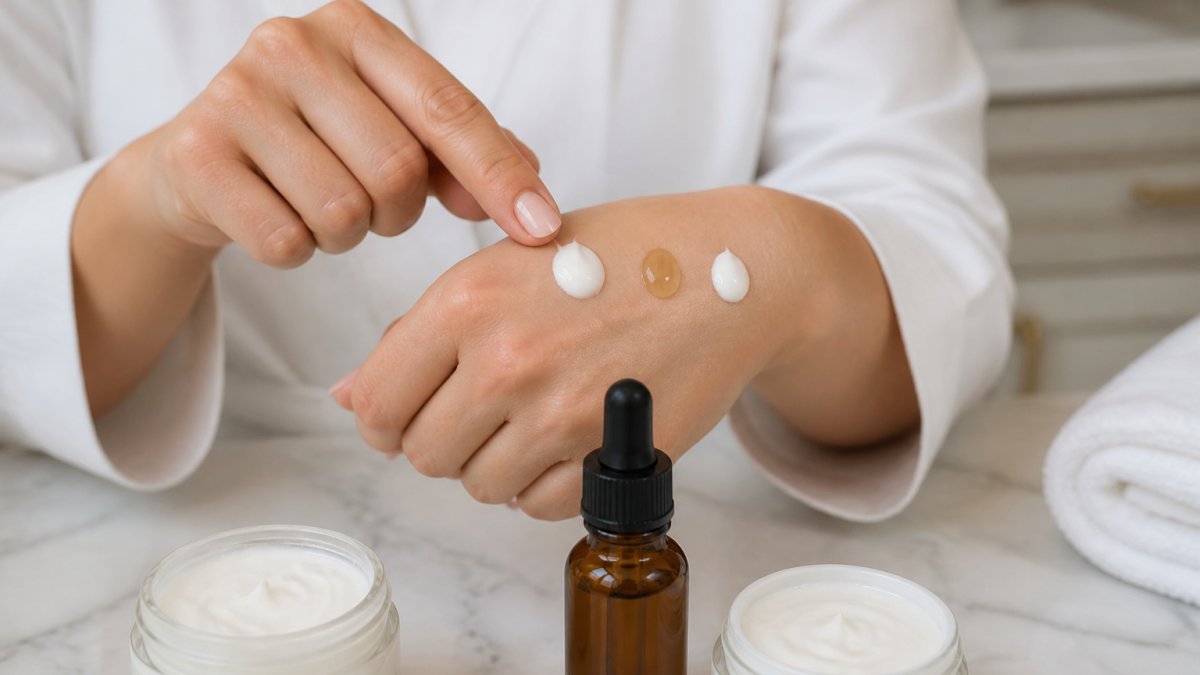
The retinol sandwich method reduces irritation while maintaining effectiveness: apply moisturizer, then retinol, then moisturizer again. The moisturizer buffers retinol, slowing penetration and reducing irritation.
Layering Order and Product Combinations
Follow this sequence every retinol night: gentle cleanser, hydrating moisturizer (dime-sized), pea-sized retinol, moisturizer layer. Optionally add a ceramide or peptide serum if skin feels tight. Choose barrier-supporting moisturizers with ceramides, hyaluronic acid, or glycerin. Skip acids and vitamin C on retinol nights.
Managing Retinol Irritation and Redness
Some irritation is normal during retinol introduction. Distinguish between expected adjustment symptoms and warning signs requiring you to slow down or stop.
Expected Adjustment Irritation vs. Warning Signs
Expected adjustment irritation:
- Mild redness appearing 2-4 hours after application and fading by morning
- Light dryness or slight flaking, especially around the mouth or nose
- Minimal tightness improving with extra moisturizer
- Slight sensitivity to other products that resolves within a few days
These symptoms typically peak in weeks 1-3 and improve by week 4-6. Continue at your current frequency or slow to every 10 days if uncomfortable.
Warning signs requiring reduced frequency or pause:
- Redness lasting all day or worsening by evening
- Stinging or burning persisting more than 30 minutes after application
- Significant flaking or peeling affecting large face areas
- Increased sensitivity to water or gentle products
- Dryness not improving with extra moisturizer
Reduce frequency or pause retinol for one week. If symptoms persist, consider switching to a lower concentration or gentler form.
Severe symptoms requiring immediate discontinuation:
PCA SKIN - Retinol Treatment for Sensitive Skin (1 oz) →
- Intense burning or stinging not improving with moisturizer
- Widespread rash, hives, or welts
- Severe swelling of the face, lips, or eyes
- Blistering or oozing
- Symptoms worsening despite reduced frequency or pausing
Stop retinol immediately and contact a dermatologist, as these may indicate allergic reaction or severe barrier compromise.
Distinguishing Irritation From Allergy
Irritation and allergy are different reactions requiring different responses.
Irritation is a temporary inflammatory response to retinol working on your skin or your barrier adjusting. It is dose-dependent, appears within hours of application, peaks over 2-4 hours, and fades within hours to a few days.
Allergy is an immune response to a specific ingredient. It is not dose-dependent; even a tiny amount can trigger it.
How to tell the difference:
- Timing: Irritation appears 1-4 hours after application; allergy can appear within minutes and worsens with each use.
- Symptoms: Irritation is redness, dryness, or mild stinging; allergy is intense itching, hives, swelling, or spreading rash.
- Response to moisturizer: Irritation improves with extra hydration; allergy does not.
- Pattern: Irritation improves over 1-2 weeks; allergy worsens with continued use.
If you suspect allergy, wash with cool water and gentle cleanser, apply soothing moisturizer, and contact a dermatologist if symptoms persist within 24 hours. Most sensitive skin experiences irritation, not allergy.
Managing Irritation: Immediate Steps
If you experience expected adjustment irritation:
-
On the night of application: Apply your second moisturizer layer generously. If moderate, add a barrier-repair serum with ceramides or peptides before the second moisturizer.
-
The next morning: Use gentle cleanser, hydrating moisturizer, and SPF 30+. UV exposure worsens irritation and delays barrier repair.
-
For the next 2-3 days: Skip all other actives. Use only gentle cleanser, hydrating toner, moisturizer, and sunscreen.
-
Reassess after 3-5 days: If irritation has faded, resume your routine. If it persists, reduce retinol frequency and repeat recovery steps.
Patch Testing and Product Introduction
Patch testing takes 2-3 minutes and prevents major problems. Do this before committing to a new retinol product, especially if you have a history of reactivity.
Patch test process:
- Apply a small amount (rice-grain size) of the retinol product to the inside of your wrist, behind your ear, or on your jawline (areas that are sensitive but less visible).
- Leave it on for 24 hours. Do not wash it off or apply other products to that spot.
- After 24 hours, observe for redness, itching, swelling, or rash.
- If no reaction, you're safe to introduce the product to your face using the gradual schedule.
- If you see a reaction, do not use this product on your face. Wash the area and apply moisturizer. Try a different product or consult a dermatologist.
Patch testing doesn't guarantee zero irritation when you use the product on your face (facial skin is more reactive than wrist skin), but it catches severe allergies before they affect your whole face.
Introducing one active at a time: If you're starting retinol and also want to add another new active (like niacinamide serum or a new moisturizer), introduce them separately, at least 2 weeks apart. This way, if irritation occurs, you'll know which product caused it.
Special Considerations: Pregnancy, Breastfeeding, and Medications
Pregnancy and breastfeeding: Retinol and other retinoids are not recommended during pregnancy or while breastfeeding. While topical retinol at low concentrations is considered lower-risk than oral retinoids, the U.S. Food and Drug Administration and most dermatologists recommend avoiding retinol during pregnancy and lactation out of caution.
Medications and supplements: Some medications increase photosensitivity or skin reactivity, making retinol use riskier. These include:
- Certain antibiotics (tetracyclines, sulfonamides)
- Nonsteroidal anti-inflammatory drugs (NSAIDs) at high doses
- Some blood pressure medications
- Photosensitizing supplements like St. John's Wort
If you take any prescription medications or supplements, mention retinol use to your prescribing clinician or pharmacist before starting.
Dermatological treatments: If you're undergoing professional skin treatments (laser, chemical peels, microneedling, or professional extractions), pause retinol for at least one week before and one week after. These treatments compromise your barrier temporarily. Adding retinol during this window multiplies irritation and healing time.
Skin Barrier Repair and Recovery Time
Your skin barrier is a protective layer of lipids and cells. Retinol can stress this barrier if you introduce it too fast. Protecting and repairing your barrier is essential for sensitive skin success.
Recovery time between retinol applications allows your barrier to rebuild. Once-weekly application gives your barrier six days to recover; nightly application gives none. Support barrier repair with moisturizers containing ceramides, peptides, or hyaluronic acid. Avoid harsh cleansers and actives on non-retinol nights. Use SPF 30+ daily to protect your adjusting barrier from UV damage. Most people fully adjust within 8-12 weeks.
Frequently Asked Questions
What retinol strength should I use if I have sensitive skin?
Start with a low-concentration retinol product, typically 0.25% or lower, specifically formulated for sensitive skin. PCA SKIN Retinol Treatment for Sensitive Skin is designed as an ideal introduction, featuring niacinamide and soothing botanical extracts to minimize irritation while your skin builds tolerance. Once your skin adjusts over 8-12 weeks, you can gradually move to slightly higher concentrations if desired.
How often should beginners with sensitive skin use retinol?
Begin with retinol once or twice per week, applying only a pea-sized amount at night. After 2-3 weeks, increase to two to three times per week if your skin tolerates it well. Continue this frequency for 4-6 weeks before considering nightly use. Most sensitive skin types benefit from staying at two to three times per week even after adjustment, as this maintains effectiveness while reducing irritation risk.
What should I use with retinol to protect my skin barrier?
Use the retinol sandwich method: apply a hydrating serum or moisturizer first, then retinol, then seal with another moisturizer. This buffering approach reduces irritation while maintaining retinol effectiveness. Follow with a barrier-supporting serum containing niacinamide or ceramides. During the day, always apply sunscreen with at least SPF 50, as retinol increases sun sensitivity. OURSELF Intelligent Defense Mineral Sunscreen SPF 50 provides both protection and barrier support.
How do I know if retinol is causing irritation versus an allergic reaction?
Irritation appears as temporary redness, dryness, peeling, or stinging that improves with moisturizer and typically subsides within 1-2 weeks as your skin adjusts. An allergic reaction causes persistent itching, swelling, hives, or rash that worsens rather than improves. If you experience allergic symptoms, discontinue the product immediately. For irritation, reduce frequency to once per week and increase moisturizer use until symptoms resolve.
Introducing retinol to sensitive skin is possible when you follow a thoughtful plan. Start with a gentle formula like PCA SKIN's Retinol Treatment for Sensitive Skin, use it once a week, apply the sandwich method, and give your barrier time to adapt. Many customers find that over 8 to 12 weeks, their skin tolerates retinol beautifully and they see real improvements in texture and tone. View all brands at OC Skin Source to find the right retinol product for your sensitive skin routine.