
How to Identify Authentic Medical Skincare: A 2026 Guide
Table of Contents
- What Makes Medical-Grade Skincare Different
- How to Identify Authentic Medical Skincare Through Packaging
- Using a Skincare Batch Code Checker to Verify Products
- The Dangers of Counterfeit Skincare Products
- Shop Only at Authorized Medical Skincare Retailers
- Red Flags That Signal a Counterfeit Product
- Price as an Indicator of Authenticity
- Get Professional Guidance to Avoid Counterfeits
Last Updated: August 25, 2026
What Makes Medical-Grade Skincare Different
Medical-grade skincare operates under stricter standards than over-the-counter products. While "medical-grade" isn't officially regulated by the FDA, products earning this designation typically contain higher concentrations of active ingredients, undergo clinical testing, and are distributed exclusively through licensed professionals or authorized retailers.
Medical-grade products penetrate deeper into dermal layers because they use smaller molecular sizes and higher concentrations of proven actives like retinoids, peptides, and pharmaceutical-grade acids. A product formulated with 10% niacinamide will perform differently than one with 5%. Clinical evidence backs these formulations, and peer-reviewed research validates the concentrations and delivery systems, where counterfeit products fail.
At OC Skin Source, we focus on education over trends, curating only brands that meet rigorous medical-grade standards. Every product is personally reviewed by licensed esthetician Sasha Young to ensure you're investing in formulations with real clinical backing, not marketing hype.
How to Identify Authentic Medical Skincare Through Packaging
Packaging tells you more about authenticity than most consumers realize. Legitimate medical-grade brands invest heavily in protective, tamper-evident packaging because product integrity directly affects efficacy. Counterfeit products often cut corners, creating visible red flags.
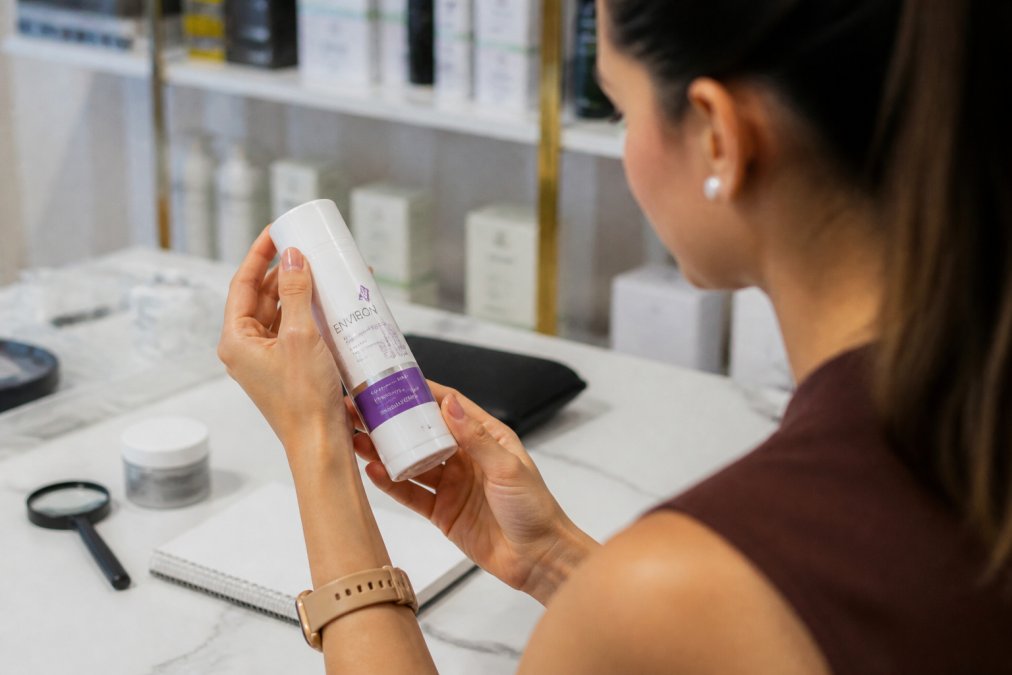
Check for Tamper-Evident Seals and Discoloration
Authentic medical-grade skincare comes with tamper-evident seals, shrink wrap, safety seals, or sealed caps. If the seal is loose, missing, or shows signs of tampering, the product's stability is compromised.
Discoloration is another critical indicator. Active ingredients like retinol, vitamin C, and peptides are light-sensitive and degrade if exposed to air or light. Authentic products use opaque or UV-protective packaging to prevent this. If you notice yellowing, browning, or cloudiness in a serum or cream that should be clear or white, the formulation has oxidized. Check the bottom and sides of the bottle too, authentic packaging is consistent with no printing errors, uneven labels, or rough edges.
Verify Label Transparency and Ingredient Lists
A transparent ingredient list is non-negotiable for authentic medical-grade skincare. The FDA requires products to list ingredients in descending order by concentration, so the first five ingredients tell you what you're actually buying. Authentic medical-grade brands list active ingredient concentrations, if a product contains 10% niacinamide or 0.5% retinol, the label should state this.
Look for third-party testing information. Legitimate brands often mention dermatologist testing or include batch-specific testing results on packaging or their website. This transparency separates authentic products from counterfeits.
Using a Skincare Batch Code Checker to Verify Products
Batch codes are your most powerful tool for verifying authenticity. Every legitimate medical-grade product receives a unique batch code during manufacturing, a fingerprint that traces the product's origin, production date, and shelf life. Counterfeiters rarely replicate batch codes correctly, and codes won't verify in official systems.
How to Locate and Read Your Batch Code
Batch codes typically appear on the bottom or back of packaging, printed directly on the bottle or label. They're usually alphanumeric combinations (like "B123456" or "LOT 2026-08-15") and may include a manufacturing date. Some brands use QR codes that link directly to batch verification.
The format varies by brand, but the code must be consistent with the brand's documented system. Counterfeit products often have batch codes that are poorly printed, misaligned, or use fonts that don't match the brand's standard. Authentic codes are crisp, clearly legible, and positioned consistently.
Tools and Websites for Batch Code Verification
Many medical-grade brands offer batch code verification directly on their websites. Search the brand name plus "batch code checker" or "verify product authenticity." Legitimate brands maintain verification databases where you enter your batch code and receive confirmation of authenticity, manufacturing date, and expiration date.
Keep records of your batch code verification. Screenshot the results or save the confirmation email. This protects you if you need to return the product or report a counterfeit.
The Dangers of Counterfeit Skincare Products
Counterfeit skincare poses real health risks beyond wasting money. Fake products may contain harmful ingredients, incorrect concentrations of actives, or bacterial contamination from poor manufacturing conditions. Your skin barrier is delicate, and exposure to counterfeit formulations can trigger allergic reactions, infections, or long-term damage.
Counterfeit retinoids are particularly dangerous. A fake retinol product might contain irritating substitutes that cause severe redness, peeling, and inflammation. Worse, counterfeit products often lack stabilizing ingredients, so the active degrades quickly, leaving you with an ineffective product that still irritates your skin.
Heavy metals and bacterial contamination are documented risks in counterfeit skincare. Manufacturing facilities that produce fakes don't follow FDA guidelines or quality control standards. Products may contain lead, arsenic, or other toxins in concentrations that pose cumulative health risks with repeated use.
Shop Only at Authorized Medical Skincare Retailers
Authorized retailers are your safest bet for authentic medical-grade skincare. These are dermatology offices, licensed esthetician clinics, brand-owned websites, and select e-commerce platforms that verify their supply chains.
Why Third-Party Marketplaces Are Risky
Third-party marketplaces like Amazon, eBay, and independent resellers create opportunities for counterfeiters. While many sellers are legitimate, the verification process isn't rigorous enough to catch all fakes. The supply chain on these platforms is murky, and counterfeit products can slip through.
Price is often the giveaway. If a medical-grade product costs significantly less on a third-party marketplace than on the brand's official website, it's likely counterfeit or gray market. Legitimate brands maintain pricing consistency to protect authorized retailers.
How to Verify an Authorized Retailer
Start with the brand's official website. Most medical-grade brands list authorized retailers in a "Where to Buy" section. Check the retailer's credentials, licensed esthetician clinics should display their licenses, and dermatology offices should be verifiable through medical licensing boards.
Ask questions. Authorized retailers know their products and can answer specific questions about active ingredient concentrations, shelf life, and proper usage. If a seller can't provide detailed product information, they're likely not authorized.
OC Skin Source operates as an authorized retailer of medical-grade brands, with every product personally reviewed by licensed esthetician Sasha Young.
Red Flags That Signal a Counterfeit Product
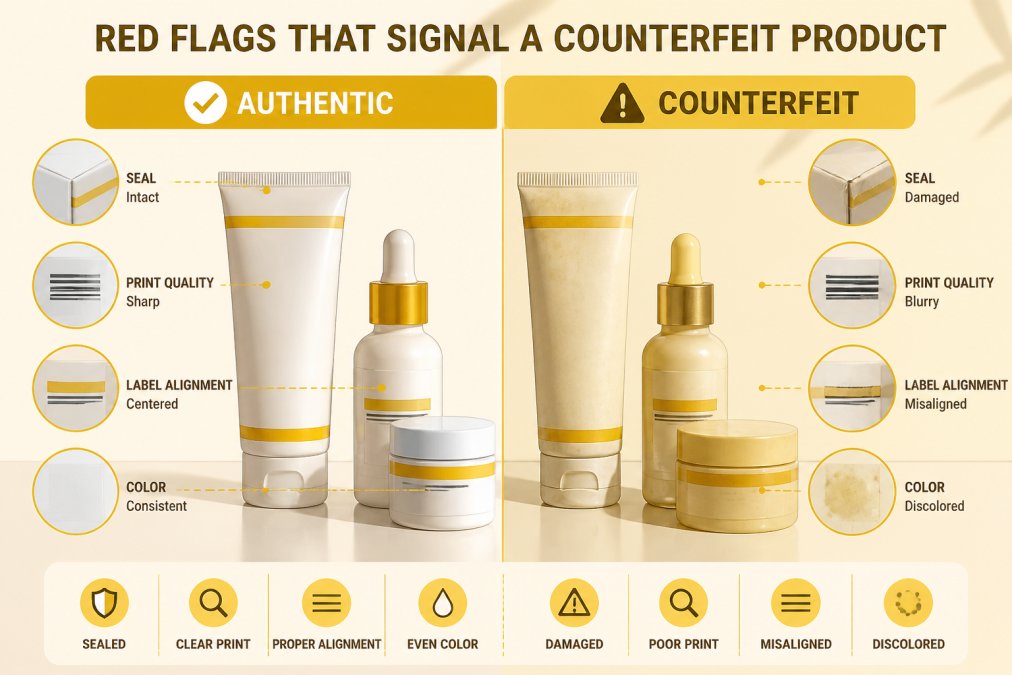
Packaging inconsistencies: Misspelled brand names, uneven printing, misaligned labels, or fonts that don't match the brand's standard packaging.
Texture and consistency issues: Medical-grade serums should have consistent texture. If a serum is grainy, separated, or has an unusual smell, it's either counterfeit or improperly stored.
Missing or vague ingredient information: If the label doesn't list all ingredients or omits concentration levels, it's a red flag.
Batch code problems: Batch codes that are poorly printed, don't exist in the brand's verification system, or don't match the brand's documented format indicate counterfeits.
Pricing that's too good to be true: If a product costs half the typical retail price, it's likely counterfeit or gray market.
Seller credibility issues: Verify authorization status with unfamiliar retailers. Unauthorized sellers are more likely to stock counterfeits.
Price as an Indicator of Authenticity
Medical-grade skincare costs more than drugstore alternatives because of higher active ingredient concentrations, clinical testing, and controlled manufacturing. Authorized retailers maintain consistent pricing, if you see drastically different prices across retailers, something's wrong.
Gray market products complicate pricing. These are authentic products diverted from authorized channels and cheaper because they bypassed official distribution, but they may lack warranty support. They're not counterfeit, but they carry more risk.
Watch for seasonal sales. Legitimate retailers occasionally discount medical-grade skincare during sales events, but discounts are typically 10-20%, not 50% or more.
Get Professional Guidance to Avoid Counterfeits
The most reliable way to ensure you're buying authentic medical-grade skincare is consulting a licensed professional. Dermatologists and estheticians have relationships with brands, understand formulation science, and source directly from manufacturers or authorized distributors, eliminating counterfeit risk.
Professional guidance also prevents using the wrong product for your skin type. Medical-grade skincare is potent, and a retinoid that works beautifully for one person can trigger severe irritation in someone with sensitive skin.
OC Skin Source offers personalized virtual skincare consultations with licensed esthetician Sasha Young. A 30-minute consultation costs $50 (regularly $75), and if you purchase $250 or more in recommended products, the consultation fee is credited back as a product credit.
Identifying authentic medical skincare requires attention to detail and a willingness to verify before you buy. Counterfeit products are avoidable if you shop through authorized retailers, verify batch codes, and examine packaging carefully. When in doubt, consult a licensed professional who can recommend authentic products tailored to your skin's needs. The FDA's guidance on cosmetic safety provides additional resources for understanding product standards. Your skin deserves formulations backed by science and manufactured with integrity.
Frequently Asked Questions
What is the difference between medical-grade and over-the-counter skincare?
Medical-grade skincare contains higher concentrations of active ingredients and undergoes clinical evidence testing for efficacy and safety. These products typically require a prescription or professional recommendation and are formulated to penetrate deeper dermal layers. Over-the-counter skincare has lower active ingredient concentrations and fewer regulatory requirements. Medical-grade products are formulated for specific skin conditions like rosacea, acne, or hyperpigmentation, while OTC options target general skincare needs.
How do I check a skincare batch code to verify authenticity?
Locate the batch code on your product's packaging, usually printed on the bottom or back. Most brands have specific batch code formats. Visit the brand's official website or use third-party batch code checker tools to enter your code and verify the manufacturing date and authenticity. If the code doesn't match the brand's system or shows an invalid format, the product may be counterfeit. Always cross-reference the batch code with the product's shelf life to ensure it hasn't expired.
Why is buying from authorized medical skincare retailers important?
Authorized retailers guarantee product integrity throughout the supply chain, ensuring the product hasn't been tampered with, stored improperly, or expired. They maintain proper temperature control and handling standards that preserve the formulation's stability and efficacy. Gray market and third-party sellers cannot guarantee these conditions, significantly increasing the risk of counterfeit or degraded products. Authorized retailers also provide authentic customer service and return policies backed by the brand.
What are the main dangers of counterfeit skincare products?
Counterfeit skincare often contains harmful substances, incorrect active ingredient concentrations, or bacterial contamination that can damage your skin barrier, trigger allergic reactions, or cause severe infections. These products lack clinical evidence and dermatologist-recommended formulations, making them unsafe for sensitive skin conditions. Counterfeits may also contain ingredients banned by the FDA or lack proper safety testing. Using fake products wastes money, delays treatment for skin concerns, and can cause long-term skin damage requiring professional treatment.