
Does Vitamin C Help With Wrinkles? What Science Shows
Table of Contents
- How Vitamin C May Help Reduce the Appearance of Wrinkles and Fine Lines
- Vitamin C Serum for Wrinkles: What the Clinical Evidence Actually Shows
- How to Use Vitamin C Serum in Your Skincare Routine
- Best Vitamin C Serum for Aging Skin: Formulation and Concentration Matter
- Vitamin C vs. Retinol for Wrinkles: Which Works Better and How They Differ
- Realistic Timelines: How Long Vitamin C Takes to Show Results on Wrinkles
- Irritation, Sensitivity, and Safe Introduction for Sensitive Skin
- Frequently Asked Questions
Last Updated: October 12, 2026
How Vitamin C May Help Reduce the Appearance of Wrinkles and Fine Lines
Does vitamin C help with wrinkles? The short answer is yes, with caveats about what the science shows and what realistic results look like. At OC Skin Source, we've analyzed the research on topical vitamin C because so many customers ask this exact question. The evidence suggests it can support skin health in ways that may improve fine lines and wrinkles over time, though it works differently than many marketing claims suggest.

Vitamin C is an antioxidant your skin cells need to function properly. Applied topically, it defends skin against free radicals and environmental stressors that contribute to visible aging. The mechanism is real, but results depend heavily on formulation, concentration, consistency, and layering.
Collagen Production and Skin Firmness
Vitamin C plays a role in collagen synthesis. Your body uses it to cross-link collagen molecules, maintaining skin structure and elasticity. As collagen breaks down with age and sun exposure, skin loses firmness and fine lines become more visible.
When vitamin C reaches viable skin cells, it can theoretically support collagen production. The catch: getting enough of the right form into skin is harder than marketing suggests. Many formulations degrade quickly or don't penetrate deeply enough to trigger meaningful collagen activity, which is why concentration, pH, and stabilization matter.
Consistent use over months may leave skin slightly firmer and smoother, a modest improvement that compounds with time and consistency, not a dramatic transformation.
Antioxidant Protection Against Free Radicals and Sun Damage
Free radicals damage skin cells through oxidative stress. Sun exposure, pollution, and normal metabolism all generate these unstable molecules. Antioxidants like vitamin C neutralize them before they damage collagen and elastin.
This protective function is where vitamin C's strongest evidence sits. It defends against further skin damage, slowing visible aging, preventive rather than corrective. You're not erasing existing wrinkles so much as slowing new ones.
Combined with sunscreen, vitamin C offers a meaningful layer of defense. Sunscreen blocks UV rays. Vitamin C handles the free radicals that slip through and the oxidative stress from daily life. Together, they slow photodamage more effectively than either alone.
Vitamin C Serum for Wrinkles: What the Clinical Evidence Actually Shows
The research on topical vitamin C for wrinkles is mixed. Some studies show modest improvements in fine lines and texture; others show minimal difference from placebo. The variation comes down to formulation quality, study duration, and subjective versus objective measurement.
A common mistake is assuming that because vitamin C is essential for skin health, slathering it on will deliver dramatic anti-aging results. The science doesn't support that leap. Stable, well-formulated serums support skin health when used consistently over months, but results are subtle.
The strongest evidence supports vitamin C's role in brightening dull skin and evening complexion. The wrinkle-reduction evidence is weaker, not because it doesn't work, but because the effect is modest and requires realistic expectations.
How to Use Vitamin C Serum in Your Skincare Routine
Proper application matters more than most people realize, a great serum applied incorrectly delivers poor results.
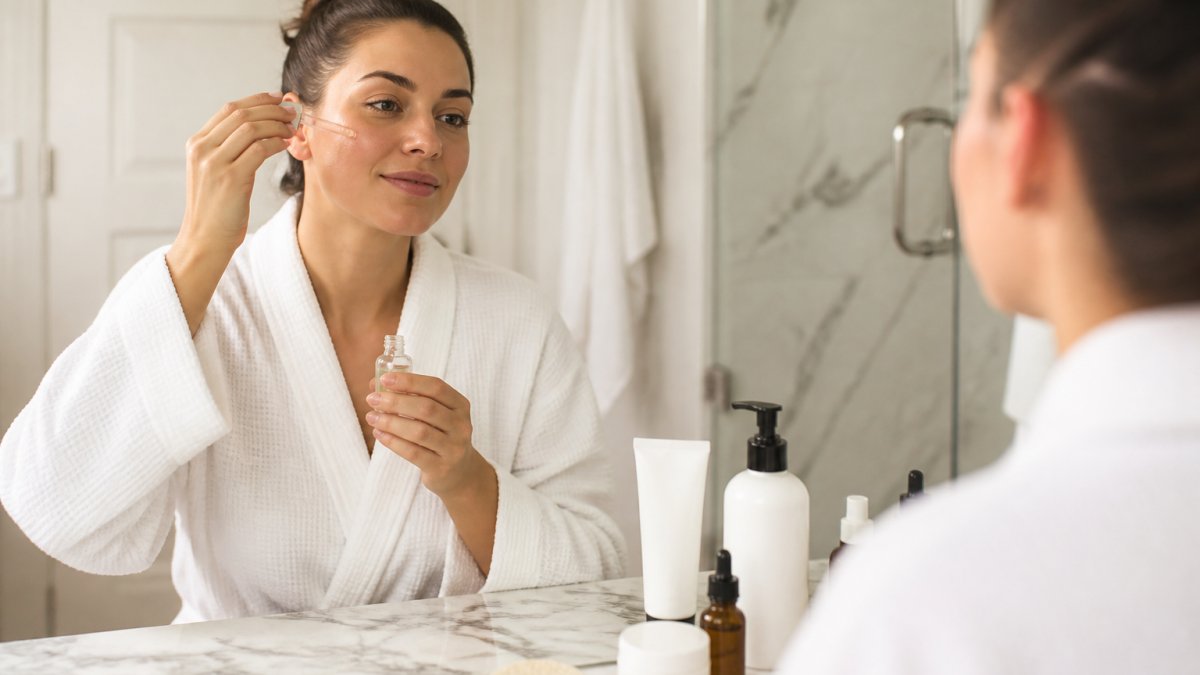
Application Steps and Layering With Other Products
Step 1: Start with clean, dry skin. Wash your face and wait a full minute to dry completely. Water dilutes the serum and reduces penetration. Pat dry gently.
Step 2: Apply a small amount. Use 2-3 drops. More is not better. Vitamin C serums are concentrated. A dime-sized amount covers your entire face and neck.
Step 3: Press and smooth gently. Don't rub or massage aggressively. Press the serum in with your fingertips, then smooth outward. Let it absorb 1-2 minutes.
Step 4: Follow with hydration. Apply your moisturizer next. This locks in the serum and provides additional hydration. A moisturizer also buffers vitamin C's acidity, which helps if you have sensitive skin.
Step 5: Use morning or evening, not both. Most people use vitamin C once daily. Morning provides antioxidant protection throughout the day, though evening is fine too.
Combining Vitamin C With Sunscreen and Other Actives
Vitamin C and sunscreen are a powerful pair. Apply vitamin C first (after cleansing and toning), let it absorb a few minutes, then apply sunscreen.
Mixing vitamin C with other actives requires caution:
- Vitamin C + Sunscreen: Excellent combination. Do this daily.
- Vitamin C + Moisturizer: Perfect. Moisturizer buffers vitamin C and adds hydration.
- Vitamin C + Niacinamide: Generally safe. Some sources suggest they can interfere, but most modern formulations are designed to work together.
- Vitamin C + Retinol: Separate these. Use vitamin C in the morning, retinol at night. Both are powerful actives and combining them increases irritation risk.
- Vitamin C + Acids (AHA/BHA): Skip this combination. Vitamin C works best at a low pH. Acids also lower pH. Together they can over-irritate skin.
- Vitamin C + Peptides: Safe to combine. They work through different mechanisms and complement each other.
If you're new to vitamin C, start with just vitamin C and a moisturizer. Once your skin adapts (usually 2-4 weeks), add other products carefully.
Best Vitamin C Serum for Aging Skin: Formulation and Concentration Matter
Not all vitamin C serums are equal. The form, concentration, and stabilization determine whether you get results or waste money.
Choosing Between L-Ascorbic Acid, Ascorbyl Palmitate, and Other Forms
L-Ascorbic Acid is the gold standard, the most researched form and the most effective at triggering collagen production and antioxidant activity.
Effective L-Ascorbic acid serums contain 10-20% concentration. Below 10%, you're unlikely to see meaningful results. Above 20%, irritation risk increases without additional benefit.
Ascorbyl Palmitate is a fat-soluble form of vitamin C. It's more stable than L-Ascorbic acid, longer shelf life, easier storage, but less potent.
Sodium Ascorbyl Phosphate sits between the two: more stable than L-Ascorbic acid but less than Ascorbyl Palmitate. It's water-soluble, absorbs quickly, and is gentler than L-Ascorbic acid but still fairly potent.
For wrinkles and visible aging, L-Ascorbic acid at 10-15% concentration is the most evidence-backed choice. If your skin is very sensitive or reactive, Ascorbyl Palmitate is a reasonable alternative, though results will be slower.
Stability, Storage, and Product Quality
A vitamin C serum is only as good as its stability. An oxidized serum won't work. How to assess quality:
Check the color. Fresh L-Ascorbic acid serums are clear or pale yellow. If the serum is brown or dark orange, it has oxidized. Don't buy it. Ascorbyl Palmitate serums are typically colorless or very pale.
Check the packaging. Quality vitamin C serums come in dark glass bottles with air-tight pumps or droppers. Clear bottles expose the product to light and accelerate degradation.
HYDRINITY - HYDRI-C Daily Vitamin C Moisturizer (1.7 oz) - Available in Deluxe →
Check the ingredient list. Look for L-Ascorbic acid in the first 5 ingredients (higher concentration). The pH should be 3.5 or lower for L-Ascorbic acid to work effectively.
Store properly. Keep vitamin C serums in a cool, dark place, a bathroom cabinet works, and the refrigerator is even better for L-Ascorbic acid serums.
At OC Skin Source, we recommend two excellent options for aging skin. The Marini SkinSolutions C-ESTA Face Serum uses Ascorbyl Palmitate, making it stable and gentle while still delivering meaningful antioxidant protection.

For those who can tolerate a stronger formulation, the PCA SKIN C&E Strength Max contains 20% pure L-Ascorbic acid paired with pure Vitamin E.
Vitamin C vs. Retinol for Wrinkles: Which Works Better and How They Differ
Both vitamin C and retinol address wrinkles, but through completely different mechanisms. Choosing between them depends on your skin type, sensitivity, and goals.
Retinol is a vitamin A derivative that increases cell turnover and stimulates collagen production directly. It's one of the most researched anti-aging ingredients, with results often visible within 4-8 weeks.
Vitamin C works primarily as an antioxidant and collagen supporter.
For wrinkles specifically: Retinol has stronger evidence for reducing fine lines and wrinkles.
For overall skin health: Vitamin C is gentler and works well for brightening, protecting against sun damage, and supporting skin texture.
The smart approach: Many dermatologists and estheticians recommend starting with vitamin C, then adding retinol once your skin is ready. Vitamin C is your gateway active.
Realistic Timelines: How Long Vitamin C Takes to Show Results on Wrinkles
This is where expectations matter most. Vitamin C doesn't work overnight. If you're hoping for visible wrinkle reduction in a week or two, you'll be disappointed.
Weeks 1-4: You may notice your skin looks slightly brighter and feels smoother. This is hydration and surface-level effects. Wrinkles themselves don't change noticeably yet.
Weeks 5-8: If you're using a potent L-Ascorbic acid serum consistently, fine lines may appear slightly softer. Skin texture improves. This is the point where some people see meaningful results.
Weeks 8-12: With consistent daily use, the cumulative effect becomes clearer. Fine lines are less pronounced and skin appears more radiant and firm.
Beyond 12 weeks: Results continue to improve slowly as collagen support accumulates, but improvement plateaus, you won't see dramatic changes after month 6.
The timeline depends on several factors:
- Formulation strength: L-Ascorbic acid at 15% shows results faster than Ascorbyl Palmitate at 5%.
- Consistency: Using vitamin C once daily is better than sporadic use, but daily use is essential for results.
- Baseline skin condition: Skin with mild fine lines responds faster than deeply etched wrinkles.
- Age and sun damage: Younger skin with less photodamage responds better.
- Other skincare habits: Sunscreen use, retinol use, and good moisturizing amplify vitamin C's effects.
Be realistic. Vitamin C is not a wrinkle eraser but a wrinkle improver.
Irritation, Sensitivity, and Safe Introduction for Sensitive Skin
Vitamin C can irritate skin, especially L-Ascorbic acid at high concentrations. If your skin is sensitive, start carefully.
For sensitive skin: Begin with a lower concentration (5-10%) or choose Ascorbyl Palmitate instead of L-Ascorbic acid.
Signs of irritation: Redness that doesn't fade within 30 minutes, stinging or burning that persists, increased breakouts, or worsening rosacea.
Combining with other actives: Don't introduce vitamin C while also starting retinol, acids, or other strong actives. Space these out by at least 2-4 weeks.
Sunscreen is essential: Vitamin C can increase photosensitivity slightly. Use broad-spectrum SPF 30 or higher daily, non-negotiable.
For those with very reactive skin, the Hydrinity HYDRI-C Daily Vitamin C Moisturizer offers a gentler entry point.
Does vitamin C help with wrinkles? The PCA SKIN C&E Advanced is our recommendation for most aging skin concerns, it delivers clinical-strength vitamin C with stabilizing technology and costs $135.00.

Frequently Asked Questions
How long does vitamin C serum take to work on wrinkles?
Most people notice initial brightening and smoother skin texture within 1-2 weeks of consistent use. However, visible improvement in fine lines and wrinkles typically requires 4-12 weeks of daily application. Results depend on the vitamin C formulation, concentration, your skin type, and consistency. Clinical studies show that higher concentrations of pure vitamin C (L-ascorbic acid) combined with daily sunscreen use produce the most measurable results on wrinkles over time.
Can vitamin C irritate sensitive skin?
Yes, some vitamin C formulations can irritate sensitive skin, particularly L-ascorbic acid at high concentrations. However, gentler forms like ascorbyl palmitate and stabilized vitamin C blends are designed for sensitive skin. If you have reactive skin, start with a lower concentration, use it 2-3 times per week initially, and gradually increase frequency. Watch for redness, stinging, or flaking. Products like HYDRI-C use formulations specifically designed to be gentle for all skin types, including sensitive skin.
Is retinol or vitamin C better for wrinkles?
Both work differently and can be used together. Vitamin C works primarily as an antioxidant that supports collagen production and brightens skin, while retinol increases cell turnover and directly stimulates collagen remodeling. Retinol typically produces faster visible results on wrinkles (6-8 weeks), but vitamin C offers gentler daily protection and brightening. Many dermatologists recommend using vitamin C in the morning with sunscreen and retinol at night for complementary anti-aging benefits.
How does vitamin C support collagen production in aging skin?
Vitamin C is a cofactor required for collagen synthesis at the cellular level. It stabilizes and cross-links collagen molecules, making existing collagen stronger and more resilient. Additionally, vitamin C's antioxidant activity protects collagen from breaking down due to free radical damage and sun exposure. This combination helps maintain skin firmness and elasticity. Consistent topical use combined with sun protection enhances these effects over time, visibly improving skin texture and reducing the appearance of fine lines.