
Dermatologist Recommended Products for Hyperpigmentation
Table of Contents
- Quick Comparison: Top Picks for Dark Spot Correction
- How We Evaluated These Hyperpigmentation Products
- 1. PCA SKIN Pigment Gel Pro: Best Overall for Stubborn Discoloration
- 2. Ourself Dark Spot Rescue Kit: Best Complete AM/PM Regimen
- 3. HydroPeptide LumaPro-C Serum: Best Vitamin C Brightening Formula
- 4. Hydrinity VIVID Brightening Serum: Best for Sensitive and Melasma-Prone Skin
- 5. PCA SKIN Pigment Gel HQ Free: Best Hydroquinone-Free Spot Treatment
- 6. Ourself Complexion Brightening Serum: Best Biotech-Powered Daily Serum
- Frequently Asked Questions
Last Updated: September 16, 2026
Quick Comparison: Top Picks for Dark Spot Correction
Finding dermatologist recommended products for hyperpigmentation can feel overwhelming when every brand claims to fade dark spots. At OC Skin Source, we've curated medical-grade formulas that actually address the root causes of discoloration rather than just masking the symptoms.
| Product | Best For | Key Ingredients | Price |
|---|---|---|---|
| PCA SKIN Pigment Gel Pro | Stubborn discoloration | SynerPro Complex | $130 |
| Ourself Dark Spot Rescue Kit | Complete AM/PM regimen | TRV Technology, Tranexamic Acid | $244 |
| HydroPeptide LumaPro-C Serum | Vitamin C brightening | Tetrahexyldecyl Ascorbate | $149 |
| Hydrinity VIVID Brightening Serum | Sensitive, melasma-prone skin | RPH Technology, Hyaluronic Acid | $150 |
| PCA SKIN Pigment Gel HQ Free | Hydroquinone-free treatment | Exfoliating Acids, Botanicals | $96 |
| Ourself Complexion Brightening Serum | Daily biotech serum | MI9 Peptide, Niacinamide | $189 |
How We Evaluated These Hyperpigmentation Products
Our selection process prioritized clinical efficacy over marketing claims. Sasha Young, our licensed esthetician, personally reviews every product for ingredient quality, formulation stability, and suitability across different skin tones and concerns. We also weighed how each formula fits into a realistic routine, because the best serum fails if it pills under sunscreen or irritates skin before results appear.

The four pigment pathways we scored against
Hyperpigmentation is not one problem, so no single ingredient solves all of it. We evaluated every product on whether it addresses one or more of these mechanisms:
- Tyrosinase inhibition, slowing the enzyme that triggers melanin production. This is the target of hydroquinone, tranexamic acid, 4-butylresorcinol, azelaic acid, and most botanical brighteners.
- Melanosome transfer disruption, interfering with how pigment packets move from melanocytes into surrounding skin cells. Niacinamide is the best-known example.
- Cell turnover acceleration, shedding pigmented surface cells faster. Retinoids and exfoliating acids (glycolic, lactic, mandelic) do this work.
- Antioxidant and barrier protection, preventing UV and inflammation from triggering new pigment. Vitamin C, vitamin E, and daily broad-spectrum SPF anchor this layer.
How we scored each product
| Criterion | What we looked for |
|---|---|
| Active concentration | Effective levels of proven actives, not trace amounts for label appeal |
| Formulation stability | Packaging and chemistry that keep vitamin C, retinoids, and peptides potent |
| Tolerability | Suitability for sensitive, dry, oily, and melanin-rich skin |
| Routine fit | Layers cleanly under moisturizer and SPF without pilling or irritation |
| Value | Cost relative to how long a bottle lasts at the labeled usage rate |
Matching the formula to your skin type
- Sensitive or reactive skin: Start with gentler actives, niacinamide, tranexamic acid, azelaic acid, or a stabilized vitamin C, and avoid stacking multiple exfoliating acids.
- Oily or acne-prone skin: Lighter gels and serums with salicylic or mandelic acid help with both post-acne marks and texture.
- Dry or mature skin: Look for brightening formulas buffered with hyaluronic acid, ceramides, or peptides so pigment correction does not strip the barrier.
- Melanin-rich skin: Higher Fitzpatrick types are more prone to post-inflammatory hyperpigmentation, so aggressive peels and high-strength resorcinol can backfire. Gentler, consistent formulas plus strict SPF are usually the safer path.
According to American Academy of Dermatology guidance on hyperpigmentation, effective treatment requires consistent use combined with daily sun protection. No serum works without broad-spectrum SPF, and skipping it can make discoloration darker, not lighter.
1. PCA SKIN Pigment Gel Pro: Best Overall for Stubborn Discoloration
PCA SKIN Pigment Gel Pro delivers visible improvement in discoloration in as little as four weeks. The hydroquinone-free formula uses SynerPro Complex to target pigmentation through multiple corrective pathways, making it effective across all skin types and tones.

Pros:
- Visible results in four weeks
- Suitable for all skin tones
- Hydroquinone-free for long-term use
Cons:
- Requires consistent daily application
- Higher price point at $130
2. Ourself Dark Spot Rescue Kit: Best Complete AM/PM Regimen
The Ourself Dark Spot Rescue Kit bundles three full-size products for a complete discoloration-focused routine. You get the Complexion Brightening Serum, Daily Renewal Cream Rich, and Intelligent Defense Mineral Sunscreen SPF 50.

The kit includes SPF 50 mineral sunscreen.
Pros:
- Complete regimen in one purchase
- Includes SPF 50 mineral sunscreen
- Saves $85 off individual pricing
Cons:
- $244 upfront investment
- Limited-time availability
3. HydroPeptide LumaPro-C Serum: Best Vitamin C Brightening Formula
HydroPeptide LumaPro-C Serum combines stable Vitamin C with peptide technology and a microbiome-activated brightener. The Tetrahexyldecyl Ascorbate form of Vitamin C inhibits excess melanin production while providing antioxidant protection.
Pros:
- Stable Vitamin C formula
- Microbiome-activated brightening
- Vegan and cruelty-free
Cons:
- Results take longer than stronger actives
- $149 price point
4. Hydrinity VIVID Brightening Serum: Best for Sensitive and Melasma-Prone Skin
Hydrinity VIVID Brightening Serum is the gentlest option on this list while still delivering professional-grade brightening. The hydroquinone-free formula uses RPH Technology to repair, prevent, and hydrate simultaneously.
Pros:
PCA SKIN - Pigment Gel Pro (1 oz) →
- Gentle enough for sensitive skin
- Excellent hydration support
Cons:
- Requires patience for results
- $150 investment
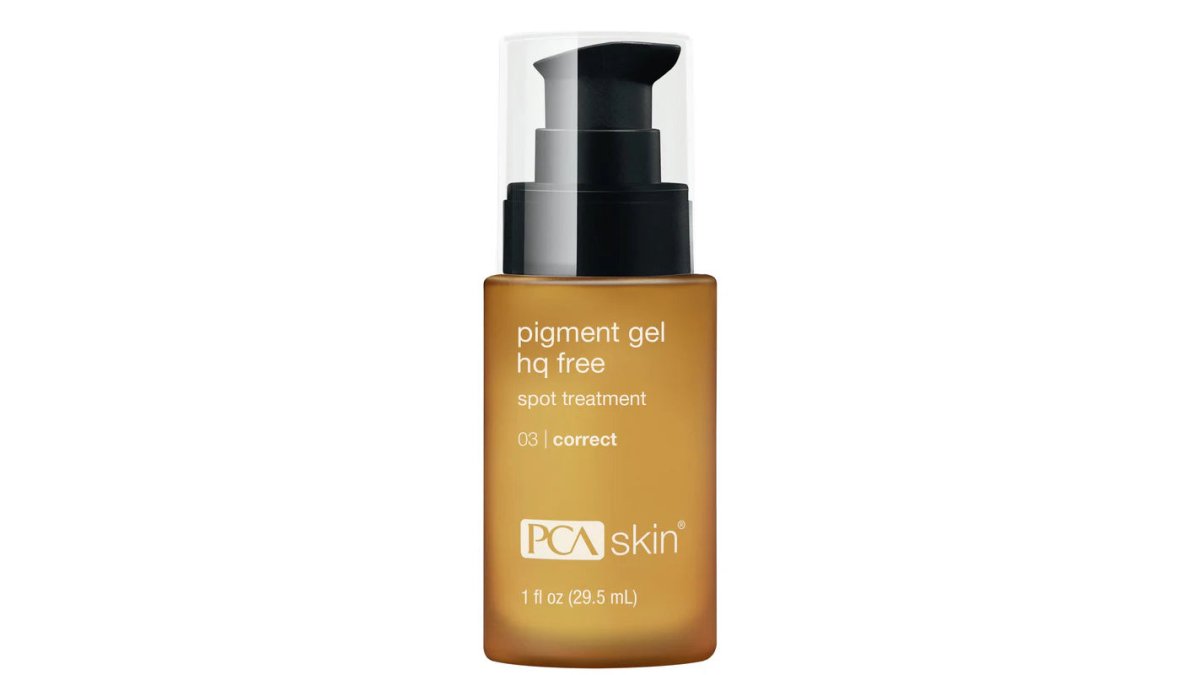
5. PCA SKIN Pigment Gel HQ Free: Best Hydroquinone-Free Spot Treatment
PCA SKIN Pigment Gel HQ Free targets visible discoloration without hydroquinone, making it ideal for those who can't tolerate traditional brightening agents. The formula combines brightening ingredients with exfoliating acids to accelerate removal of pigmented surface cells.
Hydroquinone vs. non-hydroquinone: what actually differs
Hydroquinone is a pigment inhibitor available, and it works fast. But it comes with real trade-offs that push some people toward alternatives:
- Tolerability: Hydroquinone can cause irritation, redness, and a halo of lighter skin around the treated spot if applied unevenly.
- Duration limits: Because of long-term safety concerns, many dermatologists cycle patients off hydroquinone after a few months rather than using it indefinitely.
- Access: In the U.S., concentrations above 2% require a prescription, so over-the-counter shoppers are limited to lower strengths or non-hydroquinone actives.
Where this product fits
This is a spot treatment, not a full-face brightener. Dab it only on areas of discoloration, post-acne marks, sun spots, or lingering patches, rather than spreading it across your whole face. The exfoliating acids make it a poor fit for skin that is already using a retinoid or a strong AHA/BHA, so alternate rather than stack.
Long-term maintenance after spots fade
Once discoloration fades, you do not need to keep using a strong spot treatment indefinitely, but you do need to protect the result:
- Continue daily broad-spectrum SPF 30 or higher (the American Academy of Dermatology). Without it, the same UV exposure that caused the original spot will bring it back.
- Drop to a maintenance cadence. Many people move from nightly spot treatment to two or three times per week once the area has evened out.
- Keep one brightening active in your routine. A gentle niacinamide or vitamin C serum helps prevent new pigment from forming.
- Watch for triggers. Hormonal shifts, new medications, and inflammatory acne can all reignite pigmentation, so adjust your routine rather than abandoning it.
Pros:
- Hydroquinone-free formula
- Effective for post-acne marks
- Gentle exfoliation
- Safe for extended use without cycling
Cons:
- Spot treatment only, not full-face
- Requires sunscreen diligence
- Slower results than prescription hydroquinone
6. Ourself Complexion Brightening Serum: Best Biotech-Powered Daily Serum
Ourself Complexion Brightening Serum uses patented Tiered-Release Vesicle Technology to deliver active ingredients deeper into the skin with gradual release over time. The formula combines MI9 Peptide Technology with Tranexamic Acid, Retinyl Linoleate, and Niacinamide.
Pros:
- Advanced delivery technology
- Multi-pathway pigment correction
- Lightweight, fast-absorbing
Cons:
- Premium price at $189
- Requires consistent use
Frequently Asked Questions
What does a dermatologist recommend for pigmentation?
Dermatologists typically recommend a combination approach: a tyrosinase inhibitor like hydroquinone or tranexamic acid to reduce melanin production, a retinoid to speed cell turnover, and daily broad-spectrum SPF 30 or higher. For those avoiding hydroquinone, options like PCA SKIN Pigment Gel Pro use SynerPro Complex to target discoloration through multiple pathways. In-office procedures such as chemical peels or lasers may be added for stubborn cases. Consistency with topicals and sun protection is essential for results.
What is the most effective product for hyperpigmentation?
Effectiveness depends on your skin type and the cause of discoloration. For stubborn dark spots, a multi-pathway serum like PCA SKIN Pigment Gel Pro, which is hydroquinone-free and dermatologically tested, can show visible improvement in as little as four weeks. For sensitive or melasma-prone skin, Hydrinity VIVID Brightening Serum combines pigment-correcting actives with patented hyaluronic acid to brighten without irritation. A complete regimen like the Ourself Dark Spot Rescue Kit pairs a brightening serum with SPF 50 for comprehensive care.
How do dermatologists treat hyperpigmentation in different skin tones?
Dermatologists tailor treatment to skin tone to avoid irritation and post-inflammatory hyperpigmentation. For dark skin, gentler actives like azelaic acid, tranexamic acid, and niacinamide are often preferred over aggressive peeling agents. Hydroquinone-free formulas, such as PCA SKIN Pigment Gel HQ Free, are suitable for all skin tones and can be used long-term. Sun protection with iron oxide tinted sunscreen is critical for melanin-rich skin to prevent dark spots from worsening.
Are there over-the-counter ingredients that actually work for dark spots?
Yes. Ingredients like tranexamic acid, niacinamide, vitamin C (tetrahexyldecyl ascorbate), azelaic acid, and retinoids have clinical support for fading dark spots. HydroPeptide LumaPro-C Serum uses stable vitamin C and a resurfacing peptide. For best results, pair these with daily broad-spectrum SPF. Prescription-strength hydroquinone remains the gold standard, but non-hydroquinone options are effective for maintenance and sensitive skin.
How long does it take to fade hyperpigmentation with these products?
Visible improvement typically takes 4 to 12 weeks with consistent use. PCA SKIN Pigment Gel Pro notes visible improvements in as little as four weeks. Factors like the depth of pigmentation, sun exposure, and skin turnover rate affect timing. Daily SPF is non-negotiable; without it, UV exposure can undo progress and trigger new dark spots.