
Best Anti-Aging Serums for 2026: Top Picks
Table of Contents
-
The Best Anti-Aging Serums for 2026: Our Top Picks
- SkinCeuticals C E Ferulic: Best Vitamin C Serum
- Estée Lauder Advanced Night Repair: Best All-Around Overnight Serum
- Paula's Choice CLINICAL Retinol + Bakuchiol: Best for Retinol Beginners
- Glow Recipe Plum Plump Hyaluronic Serum: Best for Deep Hydration
- The Ordinary Multi-Peptide + Copper Peptides 1%: Best Budget Peptide Pick
- Ole Henriksen Banana Bright Vitamin C Serum: Best for Brightening
- Shani Darden Retinol Reform: Best for Sensitive Skin
- Key Ingredients to Look for in Anti-Aging Serums
- Medical-Grade Skincare Benefits: Why It Matters
- How to Layer Anti-Aging Serums Without Causing Irritation
- How Long to Use Anti-Aging Serum for Results
- Choosing the Right Serum for Your Skin Type and Concerns
- Conclusion
Last Updated: August 18, 2026
The Best Anti-Aging Serums for 2026: Our Top Picks
The serum market is crowded with products promising to reverse fine lines and correct sun damage, but most deliver nothing close to their claims. At OC Skin Source, licensed esthetician Sasha Young personally evaluates every product before recommending it, ensuring professional standards rather than marketing budgets guide our selections.
The best anti-aging serums share clinically researched active ingredients, proven absorption rates, and formulations that penetrate the dermal layer. Below are seven standout picks across different skin concerns and budgets, followed by guidance on layering safely and choosing the right formula for your skin type.
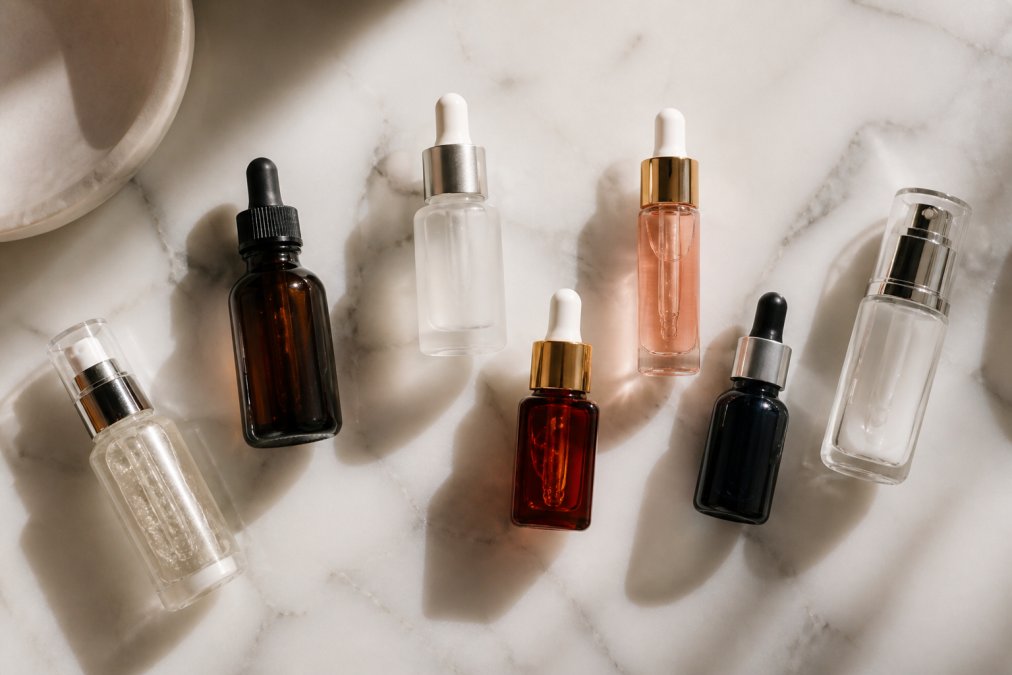
Quick Picks:
- Best Vitamin C Serum: SkinCeuticals C E Ferulic
- Best All-Around Overnight Serum: Estée Lauder Advanced Night Repair
- Best for Retinol Beginners: Paula's Choice CLINICAL Retinol + Bakuchiol
- Best for Deep Hydration: Glow Recipe Plum Plump Hyaluronic Serum
- Best Budget Peptide Pick: The Ordinary Multi-Peptide + Copper Peptides 1%
- Best for Brightening: Ole Henriksen Banana Bright Vitamin C Serum
- Best for Sensitive Skin: Shani Darden Retinol Reform
SkinCeuticals C E Ferulic: Best Vitamin C Serum
The gold standard in antioxidant protection. SkinCeuticals C E Ferulic combines 15% L-ascorbic acid with 1% vitamin E and 0.5% ferulic acid, a trio that research shows outperforms any single antioxidant. Once absorbed, the formula remains active for up to 72 hours, providing sustained environmental protection against UVA/UVB radiation, infrared radiation, and ozone pollution.
Apply 4-5 drops to dry face, neck, and chest each morning after cleansing. It absorbs quickly and layers well under SPF. Keep it away from direct sunlight; if the serum turns orange or brown, it has oxidized and lost potency.
Best for: Sun damage correction, antioxidant protection, and visible reduction of fine lines.
Estée Lauder Advanced Night Repair: Best All-Around Overnight Serum
Advanced Night Repair has earned cult status through consistent results across multiple aging concerns. The formula targets fine lines, wrinkles, uneven skin tone, and loss of firmness while hyaluronic acid locks in moisture for up to 72 hours. The proprietary Night Peptide supports skin's natural repair processes during sleep, paired with 8-hour antioxidant protection against free radical damage. Oil-free and suitable for all skin types.
Best for: All skin types seeking multi-concern anti-aging support with strong hydration.
Paula's Choice CLINICAL Retinol + Bakuchiol: Best for Retinol Beginners
Retinol is the most clinically studied anti-aging ingredient available without a prescription, accelerating cell renewal and visibly reducing wrinkles. Paula's Choice solves the irritation barrier by pairing 0.3% retinol with 2% plant-derived bakuchiol, which provides retinol-like benefits with significantly less irritation. The formula also includes firming peptides to support collagen production. Fragrance-free and paraben-free, it suits sensitive skin.
Start with two to three nights per week, then build frequency as your skin adapts.
Best for: Those new to retinol who want real anti-aging results without the typical adjustment period.
Glow Recipe Plum Plump Hyaluronic Serum: Best for Deep Hydration
Dehydration is an underestimated contributor to visible aging. When skin lacks moisture, fine lines appear more pronounced and the complexion loses plumpness. Glow Recipe's formula uses five molecular weights of hyaluronic acid, each penetrating a different skin depth to deliver hydration from surface to dermal layer. Plum extract and vegan collagen support skin firmness and brightness. The lightweight, oil-free texture layers easily without pilling.
Best for: Dry, dehydrated, or dull skin types seeking intense hydration and a plumping effect.
The Ordinary Multi-Peptide + Copper Peptides 1%: Best Budget Peptide Pick
The most affordable entry on this list. The Ordinary's formula combines 1% GHK-Cu copper peptide with seven additional peptides, a probiotic ferment, and a hydration complex that mimics the skin's natural moisturizing factors. Peptides signal the skin to produce collagen and elastin, supporting elasticity and firmness.
Important: copper peptides cannot be used alongside direct acids or pure vitamin C. Use this serum on alternate evenings or at a different time of day to avoid neutralizing the copper peptides.
Best for: Budget-conscious shoppers seeking comprehensive peptide support for elasticity and firmness.
Ole Henriksen Banana Bright Vitamin C Serum: Best for Brightening
This serum targets hyperpigmentation, dark spots, and dull, uneven skin tone. Ole Henriksen's formula contains 15% L-ascorbic acid for antioxidant brightening, 5% PHAs for gentle chemical exfoliation, and hyaluronic acid for hydration. Polyhydroxy acids exfoliate more gently than AHAs, making this practical for those wanting combined vitamin C and mild resurfacing benefits without stronger acid sensitivity.
Keep it away from light and heat to prevent oxidation. Some users experience initial tingling, which typically subsides as skin adjusts.
Best for: Hyperpigmentation, sun damage, and uneven skin tone with added exfoliation benefits.
Shani Darden Retinol Reform: Best for Sensitive Skin
Most retinol serums force a choice between results and tolerance. Retinol Reform uses 1% encapsulated retinol, a delivery system that releases the active ingredient gradually, significantly reducing dryness and peeling. The formula pairs encapsulated retinol with lactic acid for brightening, wrinkle-reducing tripeptides, and prickly pear extract. Many users report visible improvements in skin firmness and texture within two weeks.
All retinol products require consistent sunscreen use during the day. Retinol increases photosensitivity, and skipping SPF will undermine every benefit.
Best for: Sensitive skin types who have struggled with irritation from standard retinol formulas.
Key Ingredients to Look for in Anti-Aging Serums
Understanding what an anti-aging serum contains determines everything: absorption rate, mechanism of action, and the specific concerns it addresses.
Retinol vs. Bakuchiol: Which Is Right for You?
Retinol is a vitamin A derivative that accelerates cell renewal, stimulates collagen production, and visibly reduces fine lines with consistent use. It is the most evidence-backed topical anti-aging ingredient available without a prescription. The trade-off is an adjustment period: dryness, flaking, and temporary redness are common in the first four to six weeks.
Bakuchiol is a plant-derived compound that activates some of the same skin pathways as retinol without the same irritation profile. It is gentler but generally less potent than retinol at comparable concentrations. Combining both, as seen in Paula's Choice CLINICAL, extends retinol's benefits while buffering irritation.
| Ingredient | Mechanism | Best For | Irritation Level |
|---|---|---|---|
| Retinol | Accelerates cell renewal, boosts collagen | Wrinkles, texture, firmness | Moderate to high initially |
| Bakuchiol | Retinol-like receptor activation | Sensitive skin, fine lines | Low |
| Retinol + Bakuchiol | Combined efficacy, reduced irritation | All skin types, beginners | Low to moderate |
Vitamin C, Ferulic Acid, and Antioxidant Combos
Vitamin C (L-ascorbic acid) is the most effective topical antioxidant for neutralizing free radical damage from UV exposure and environmental pollution. The challenge is stability: L-ascorbic acid oxidizes quickly when exposed to light and air.
Ferulic acid stabilizes vitamin C formulations and amplifies their antioxidant activity. According to research published through the National Institutes of Health's PubMed database, the combination of L-ascorbic acid, vitamin E, and ferulic acid produces a synergistic antioxidant effect that outperforms any single ingredient in isolation. For mature skin dealing with pigmentation and sun damage, a well-formulated vitamin C serum used consistently each morning is one of the highest-impact additions to any routine.
Hyaluronic Acid and Peptides for Plumping and Firmness
Hyaluronic acid is a humectant that draws moisture into the skin from the environment and deeper tissue layers. Its effectiveness depends on molecular weight: larger molecules hydrate the surface, while smaller molecules penetrate deeper. Serums with multiple molecular weights deliver more comprehensive hydration.
Peptides are signal molecules that prompt the skin to produce collagen and elastin. Copper peptides (GHK-Cu) are among the most studied for skin renewal.
Medical-Grade Skincare Benefits: Why It Matters
Medical-grade skincare has a specific meaning: formulations developed with higher concentrations of active ingredients, rigorous stability testing, and clinical evidence supporting claims. They are typically sold through licensed professionals rather than mass-market retail, ensuring recommendations match individual skin concerns.
The practical difference shows in results. Mass-market serums often contain active ingredients at concentrations too low to produce meaningful dermal changes. Medical-grade formulations are designed to reach the tissue depth where collagen production, cell renewal, and pigmentation occur. OC Skin Source curates specifically from this category, with every product personally reviewed by licensed esthetician Sasha Young, reflecting clinical standards rather than trend cycles.
How to Layer Anti-Aging Serums Without Causing Irritation
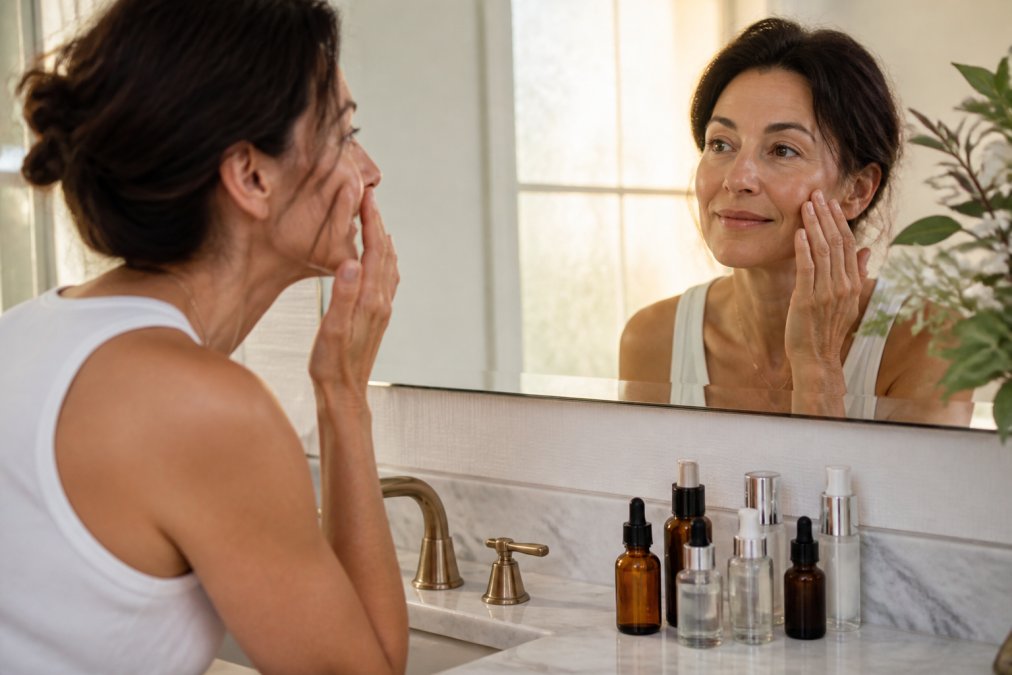
Layering anti-aging serums incorrectly is one of the most common reasons people abandon otherwise effective products. Layer serums from thinnest to thickest texture, with the most active or acidic formulas applied first. Give each layer 60 to 90 seconds to absorb before applying the next.
Ingredient Combinations to Avoid
Some ingredient pairings actively work against each other or cause unnecessary irritation when used together.
- Vitamin C (L-ascorbic acid) + Retinol: Both are potent actives that compound irritation risk. Use vitamin C in the morning and retinol at night.
- Copper peptides + Vitamin C or direct acids: Copper peptides are deactivated by acidic environments. Never layer them with L-ascorbic acid serums or AHA/BHA exfoliants.
- Retinol + AHA/BHA exfoliants: Both accelerate cell turnover. Using them together increases over-exfoliation risk and barrier disruption.
- Multiple actives on reactive skin: Introduce one new active at a time. Wait two to three weeks before adding another.
Morning vs. Evening Layering Order
Morning routine:
- Cleanser
- Toner (if used)
- Vitamin C serum (antioxidant protection before sun exposure)
- Hyaluronic acid serum (if layering)
- Moisturizer
- SPF 30 or higher (non-negotiable)
Evening routine:
- Cleanser (double-cleanse if wearing SPF or makeup)
- Toner (if used)
- Peptide serum (if not using copper peptides with acids)
- Retinol or retinol + bakuchiol treatment
- Moisturizer or barrier repair cream
How Long to Use Anti-Aging Serum for Results
Results depend on the ingredient and concern being addressed. Hyaluronic acid produces visible plumping within days. Vitamin C serums typically show improvements in skin tone and brightness within four to eight weeks. Retinol requires the longest runway: most users see meaningful improvement in fine lines and texture after 12 to 16 weeks of consistent use. Initial dryness and flaking indicate the skin is adapting to accelerated cell renewal. Peptide serums generally show collagen and elasticity improvements after six to twelve weeks. Consistency is the variable that separates results from disappointment.
Choosing the Right Serum for Your Skin Type and Concerns
Anti-aging serums are not interchangeable. The right choice depends on your primary concern, your skin's tolerance level, and your skincare experience.
For mature skin dealing with sun damage and uneven pigmentation, a well-formulated vitamin C serum used every morning is the highest-priority addition. SkinCeuticals C E Ferulic or Ole Henriksen Banana Bright are both strong choices depending on budget.
For skin that has lost firmness and density, peptides are the most targeted approach. The Ordinary Multi-Peptide + Copper Peptides offers serious formulation at an accessible price; Estée Lauder Advanced Night Repair covers similar ground with added hyaluronic acid.
For fine lines and wrinkles, retinol is the evidence-backed choice. Shani Darden Retinol Reform is the best starting point for sensitive skin; Paula's Choice CLINICAL Retinol + Bakuchiol is better for those wanting a more aggressive formula with built-in irritation buffering.
Dehydrated skin should start with a hyaluronic acid serum before adding any actives. According to the American Academy of Dermatology on anti-aging skincare, a consistent routine with a few well-chosen actives outperforms a complex multi-product protocol applied inconsistently.
| Skin Concern | Recommended Ingredient | Top Pick |
|---|---|---|
| Sun damage, pigmentation | Vitamin C + ferulic acid | SkinCeuticals C E Ferulic |
| Fine lines, wrinkles | Retinol or retinol + bakuchiol | Paula's Choice CLINICAL |
| Loss of firmness, elasticity | Peptides, copper peptides | The Ordinary Multi-Peptide |
| Dehydration, dullness | Hyaluronic acid | Glow Recipe Plum Plump |
| Sensitive skin + aging | Encapsulated retinol | Shani Darden Retinol Reform |
| Brightening + exfoliation | Vitamin C + PHAs | Ole Henriksen Banana Bright |
| Multi-concern overnight repair | Night peptide + hyaluronic acid | Estée Lauder Advanced Night Repair |
Conclusion
Finding anti-aging serums that actually deliver requires moving past marketing language and evaluating formulations on ingredient concentration, clinical evidence, and compatibility with your skin type. The products on this list represent the best available across different categories and price points, each selected for what it actually does.
OC Skin Source takes the guesswork out of this process. Every product is personally reviewed by licensed esthetician Sasha Young, with a focus on medical-grade formulations that address real concerns like sun damage, fine lines, and loss of firmness. If you are ready to build a routine that works, view all brands at OC Skin Source and get a curated recommendation matched to your skin.
Frequently Asked Questions
What ingredients should I look for in an anti-aging serum?
The most clinically supported ingredients include retinol for cell renewal and collagen production, vitamin C (specifically L-ascorbic acid) for antioxidant protection and brightening, hyaluronic acid for hydration and plumping, peptides for skin firmness and elasticity, and ferulic acid to stabilize and boost vitamin C's effectiveness. For mature skin dealing with sun damage or pigmentation, a serum combining two or more of these active ingredients will typically deliver more visible results than a single-ingredient formula.
How long does it take to see results from an anti-aging serum?
Most anti-aging serums require consistent daily use for at least 4 to 12 weeks before visible improvements appear. Hydrating serums with hyaluronic acid tend to show plumping effects within days. Retinol serums typically take 8 to 12 weeks of regular use to meaningfully reduce fine lines and improve skin texture. Vitamin C serums can brighten skin tone within 4 to 6 weeks. Patience and consistency matter more than switching products frequently, which can disrupt your skin barrier.
Are there anti-aging serums recommended for sensitive skin?
Yes. For sensitive skin, look for fragrance-free, non-comedogenic formulas that use encapsulated retinol rather than straight retinol, since encapsulation slows delivery and reduces irritation. Bakuchiol is a plant-derived alternative to retinol that supports collagen production with less risk of redness. Avoid layering acids with retinol or copper peptides. Starting with a lower-concentration formula and introducing it gradually, two to three nights per week, gives skin time to adjust without triggering a flare-up.
How do medical-grade anti-aging serums differ from drugstore options?
Medical-grade serums are formulated with higher concentrations of active ingredients, such as 15% L-ascorbic acid or 1% encapsulated retinol, and are often backed by clinical trials and dermatologist testing. Drugstore products must meet FDA cosmetic labeling rules but are not required to prove efficacy. The difference shows up in absorption rate and how deeply active ingredients reach the dermal layer. Medical-grade options also tend to use more stable delivery systems, which keeps ingredients effective longer after opening.
Can anti-aging serums help reverse sun damage?
Serums cannot fully reverse sun damage, but several active ingredients can visibly reduce its appearance. Vitamin C combined with ferulic acid is one of the most studied combinations for addressing pigmentation and uneven skin tone caused by UV exposure. Retinol accelerates cell renewal, which helps fade dark spots over time. Consistent use of a targeted serum, alongside daily broad-spectrum SPF 30 or higher, is the most effective approach for improving the look of sun-damaged mature skin.
This article was written using GrandRanker